Image - 2026-11-26 21:04
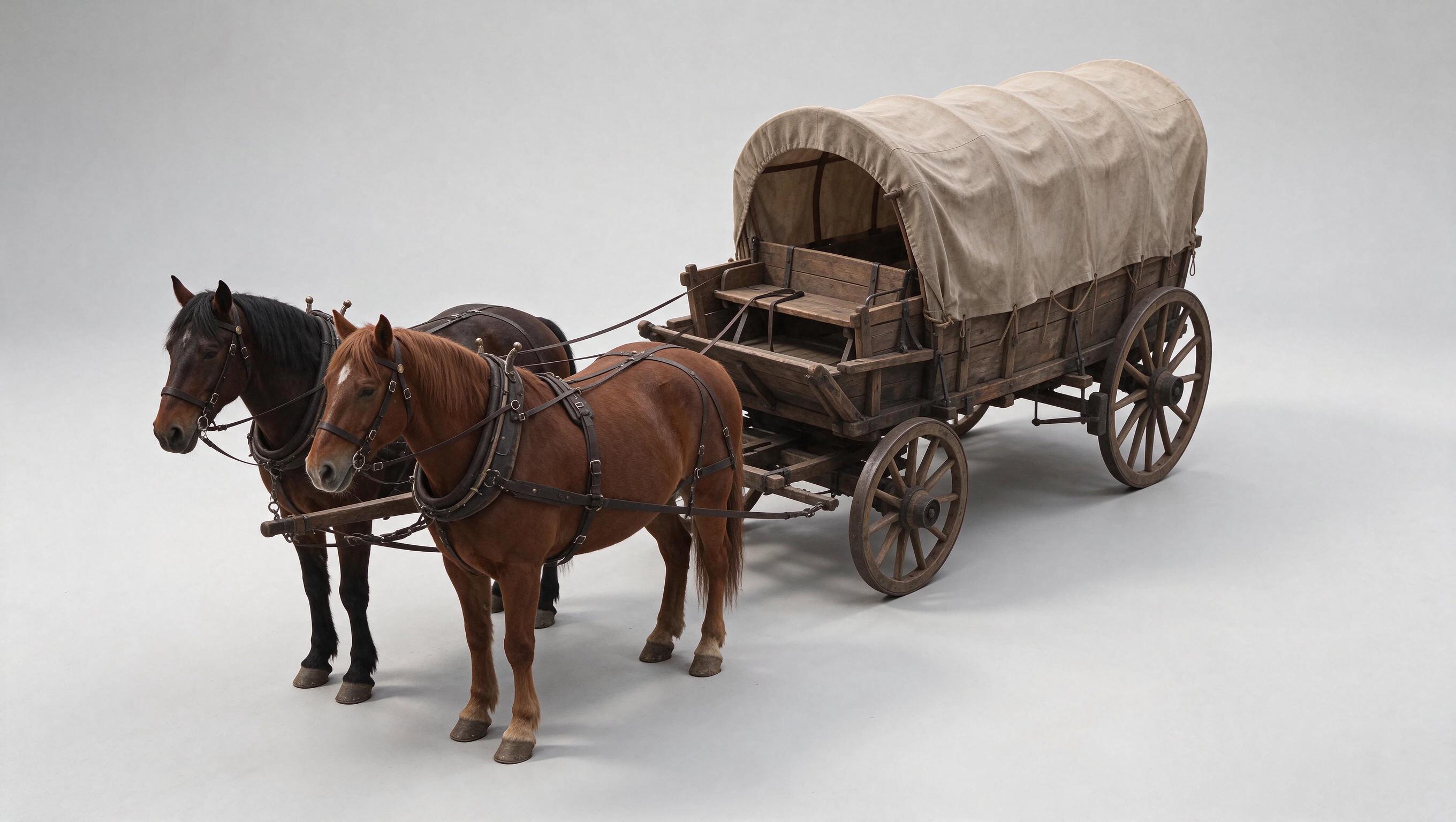
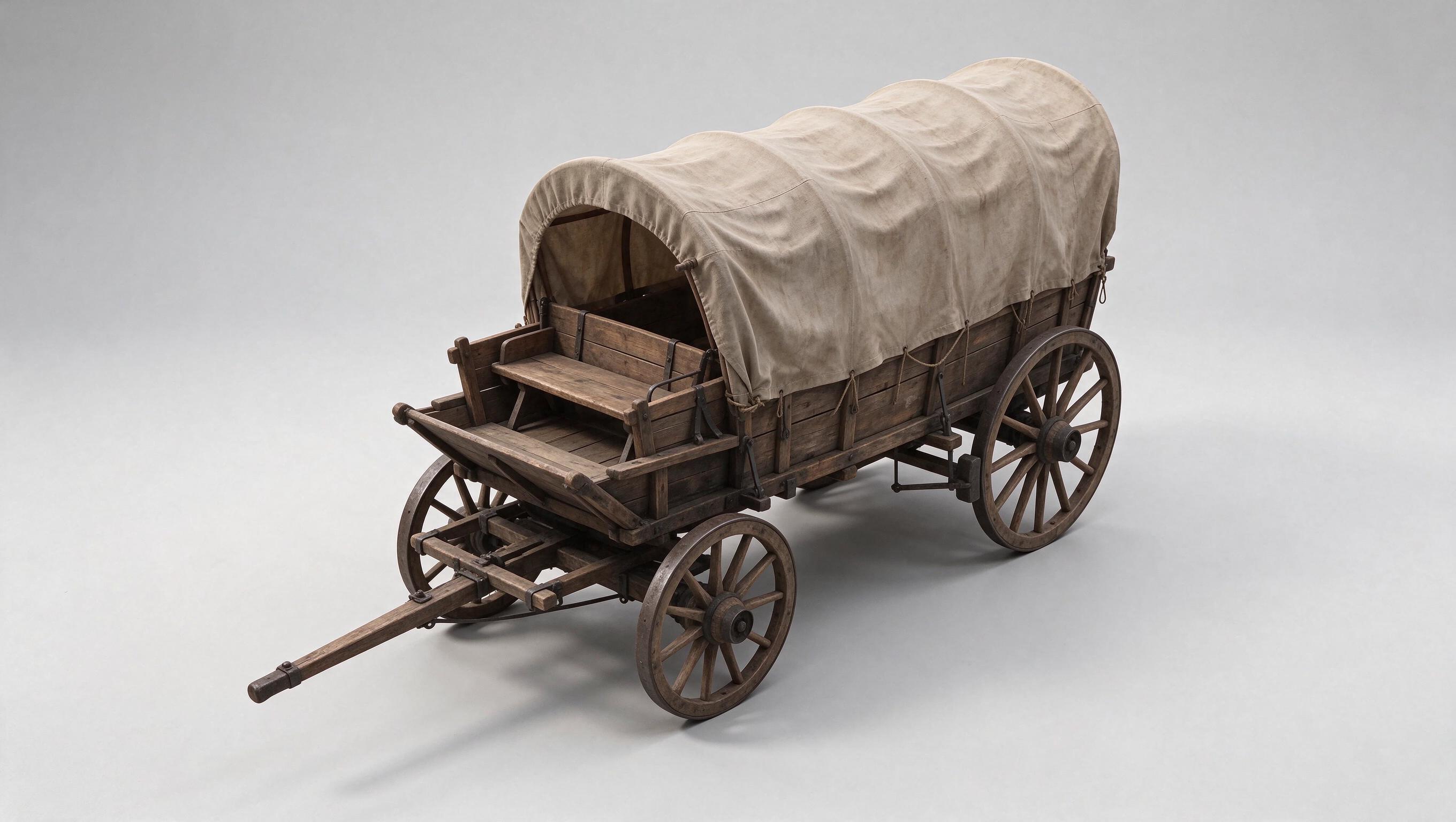
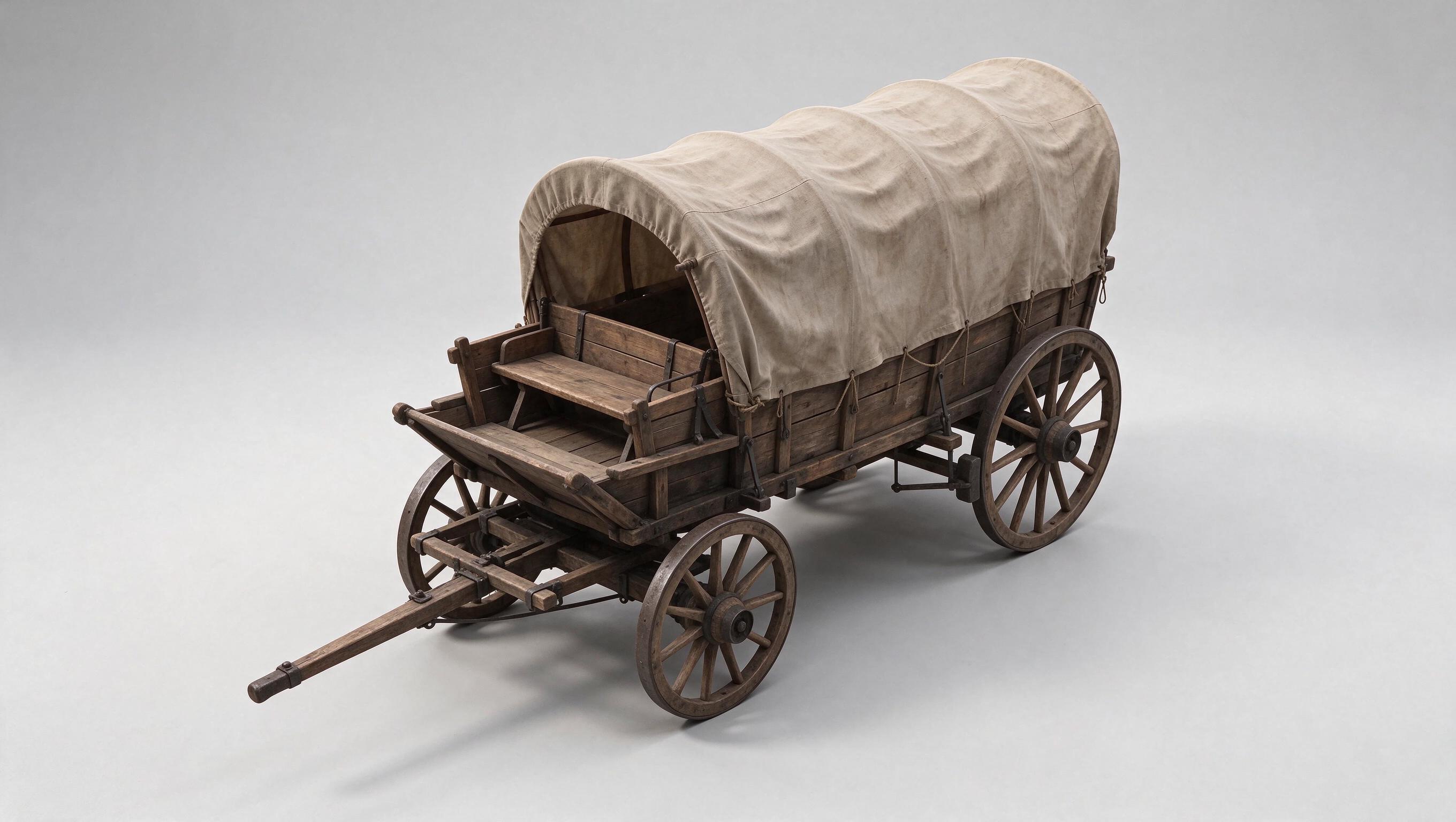
# ROAD OF WORLDS — ACT I # MAIN COVERED WAGON WITH TWO HORSES ## Hollywood Live-Action Cinematic Vehicle Reference Create ONE extraordinarily photorealistic cinematic studio photograph of the EXACT SAME medieval covered wagon shown in the uploaded reference, now with TWO realistic draft horses correctly harnessed to its FRONT towing assembly. This is an official vehicle and animal reference for the high-budget live-action fantasy adventure film ROAD OF WORLDS — ACT I. **ABSOLUTE REQUIREMENT: PRESERVE THE APPROVED WAGON DESIGN AND ADD EXACTLY TWO HORSES, STANDING SIDE BY SIDE, CORRECTLY ATTACHED TO THE WAGON.** The image must look like a genuine professional photograph of a real historical wagon and two living horses prepared for a major Hollywood film production. Not a painting, not an illustration, not a CGI render, not a video-game asset. ## 1. PRIMARY REFERENCE — THE APPROVED WAGON The uploaded wagon photograph is the definitive design reference. Preserve its complete physical construction: - Exactly four wooden spoked wheels. - Two smaller front wheels. - Two larger rear wheels. - Original wheelbase and axle placement. - Original weathered wooden body. - Original wooden plank sidewalls. - Original tall, curved, light-beige linen canvas canopy. - Exact canopy curvature, height, seams, wrinkles and supporting bows. - Original ropes, knots, straps, iron fittings and wooden reinforcements. - Original rear passenger entrance. - Original front driver's bench. - Original driver's seat backrest and wooden foot platform. - Original wooden towing pole and front axle assembly. - Original natural wood, fabric and metal colors. - Original rustic proportions, construction and weathering. **DO NOT REDESIGN, REBUILD OR MODIFY THE APPROVED WAGON.** Do not change the position of the front and rear. Do not change the shape or size of the canopy. Do not replace the wheels. Do not invent additional seats, doors, windows or decorations. The wagon must remain visually identical to the uploaded photograph. ## 2. EXACTLY TWO HORSES — ANATOMY AND APPEARANCE Add exactly TWO real, adult, powerful working horses suitable for pulling a loaded medieval passenger and supply wagon over a long mountain road. Both horses must look like genuine living animals photographed in natural light. They must have physically accurate anatomy, believable proportions, powerful musculature and realistic weight. **HORSE A — LEFT HORSE:** A strong dark bay working horse. - Deep reddish-brown coat. - Black mane and tail. - Dark lower legs. - Strong muscular neck. - Broad chest. - Powerful shoulders. - Thick working legs. - Natural dark hooves. - Calm, attentive expression. **HORSE B — RIGHT HORSE:** A strong warm chestnut working horse. - Natural chestnut-brown coat. - Slightly lighter reddish-brown mane and tail. - Broad muscular chest. - Strong neck and shoulders. - Powerful working legs. - Natural hooves. - Calm, attentive expression. Both horses must belong to a similar robust working-horse type. They should be approximately the same height and physical size. They must look strong enough to pull the wooden wagon comfortably, but not unnaturally gigantic. No exaggerated fantasy proportions. No extremely long legs. No miniature horses. No unrealistic bodybuilding anatomy. **REALISTIC HORSE DETAILS:** - Individually visible hair fibers. - Natural coat direction. - Subtle variations in coat color. - Realistic skin around the eyes, muzzle and nostrils. - Natural eyelashes. - Physically correct ears. - Realistic neck muscles and shoulder structure. - Accurate knee, hock and ankle joints. - Realistic hooves. - Natural mane and tail movement implied by gravity. - Slightly different natural postures to avoid artificial duplication. Both horses are standing calmly and waiting for their driver. They are NOT running, rearing, jumping or pulling aggressively. Their front hooves are planted naturally on the studio floor. ## 3. HORSE POSITION — STRICT GEOMETRY Both horses must be located DIRECTLY IN FRONT OF THE WAGON, on the towing side. The wagon's FRONT is the end containing the wooden driver's seat, the two SMALLER wheels and the towing pole. The two horses stand SIDE BY SIDE, forming one correctly aligned pulling team. Horse A stands to the LEFT of the central towing pole. Horse B stands to the RIGHT of the central towing pole. Both horses face the SAME direction, AWAY FROM THE WAGON. Their bodies are parallel. Their heads point toward the wagon's direction of travel. The distance between the horses must be anatomically and mechanically plausible. **CRITICAL CONNECTION RULE:** The wagon's central wooden towing pole must extend forward BETWEEN THE TWO HORSES. It must NOT pass through either horse's body. The pole must NOT attach directly to a horse's mouth, head or neck. The pole must be supported and guided by a physically plausible paired-horse harness arrangement. The horses must be positioned far enough ahead of the front axle to provide realistic clearance for their bodies and hind legs. The horses must not overlap the front wheels or the driver's foot platform. ## 4. HISTORICALLY PLAUSIBLE TWO-HORSE HARNESS Create a realistic traditional leather harness system suitable for a medieval or early pre-industrial working wagon. Each horse must wear its own functional harness. **HEAD AND BRIDLE:** - Dark brown leather bridle. - Realistic leather headstall. - Leather cheek straps. - Physically correct bit and metal fittings. - Functional reins. - No decorative fantasy head armor. - No modern synthetic materials. **DRAFT HARNESS:** - Properly fitted heavy leather horse collars. - Realistic collar padding. - Strong leather traces running backward toward the wagon's draft mechanism. - Functional breast and body straps where appropriate. - Realistic buckles, metal rings and leather stitching. - Natural tension and gravity. - Physically believable harness attachment points. **CENTRAL TOWING POLE:** Keep the wagon's original central wooden pole. Connect it to the paired horses using a functional pole-head support and guiding arrangement appropriate for a two-horse wagon. The pulling force must be transmitted through the horses' collars and traces to a mechanically plausible wagon draft assembly. Do not suggest that the central pole alone carries all pulling force. The leather traces must connect to the wagon without floating, crossing unnaturally, or passing through the horses. **REINS:** Two sets of leather reins should run from the horses' bridles back toward the driver's bench. The reins may rest naturally on the empty wooden driver's seat. They must not appear to be pulled by an invisible person. No driver is present. **IMPORTANT:** Every strap must have a purpose. Every harness component must have a visible and believable attachment point. No floating reins. No disconnected leather belts. No impossible knots. No random decorative straps. No modern carriage harness made from synthetic webbing. No saddles. No riders. ## 5. DRIVER'S BENCH — PRESERVE EXACTLY The wagon has an approved external wooden driver's bench positioned in front of the covered passenger compartment. This seat must remain clearly visible. Preserve: - The existing wooden seat. - Its original backrest. - Its side supports. - The wooden platform beneath it. - The original connection to the wagon chassis. Do not move the seat. Do not enlarge it. Do not place it inside the passenger compartment. Do not obstruct it with extra wooden structures. The seat must remain empty. Later, the main wagon driver will sit here and control the two horses. The covered compartment behind the seat is reserved for passengers, including the three children from the story. Do not add passengers yet. ## 6. PHYSICAL SCALE AND PROPORTIONS Maintain realistic proportions between the wagon and horses. The horses must look capable of pulling the wagon without appearing either tiny or absurdly large. The covered wagon remains a medium-sized rural passenger and supply vehicle. The horses should have an appropriate working-horse build, with enough body mass and strength to pull the loaded wagon. Both horses must stand on the same ground plane as the wagon. Their hooves and the wagon wheels must have matching contact shadows. The camera perspective must be consistent across all objects. The wagon and horses must appear to occupy one continuous physical space. No floating objects. No impossible scale relationships. ## 7. HOLLYWOOD CINEMATIC HYPERREALISM **Hollywood Cinematic Hyperrealism.** **Live-Action Feature Film.** **Ultra-Realistic Cinematic Photography.** ARRI Alexa 35 visual characteristics. Cooke S4/i cinematic lens aesthetics. Kodak Vision3-inspired organic photographic color grading. Professional high-budget Hollywood production photography. Extremely realistic optical detail. Wide dynamic range. Natural skin, hair, wood, fabric and metal textures. Controlled highlights. Soft organic shadow transitions. Natural color reproduction. Subtle fine-grain film texture. The image must feel like a real professional photograph of a genuine practical movie prop and two living horses. **WAGON MATERIALS:** Natural aged timber with authentic grain, knots, cracks, scratches and weathering. Heavy beige linen canvas with realistic fabric fibers, stitching, folds and natural gravity. Dark forged-iron metal fittings with wear, scratches and subtle oxidation. Coarse natural ropes with realistic fibers. **HORSE MATERIALS:** Natural coats with realistic individual hair strands. Correct anatomy and physically believable muscles. Realistic leather tack with genuine grain, wear and stitching. Natural metal hardware. No waxy surfaces. No plastic materials. No polished CGI appearance. No excessive digital sharpening. ## 8. CAMERA ANGLE — ELEVATED FRONT THREE-QUARTER Create ONE professional wide horizontal photograph. The camera should show the entire horse-and-wagon assembly from a slightly elevated FRONT THREE-QUARTER angle. **CAMERA POSITION:** - Located diagonally in front of the horses and wagon. - Approximately 35–45 degrees from the longitudinal axis. - Slightly elevated to approximately 2.5–3 meters above ground. - Looking gently downward at approximately 15–20 degrees. - Natural cinematic perspective. - No extreme wide-angle distortion. The composition must clearly reveal: 1. Both horses standing beside each other. 2. The harness systems. 3. The central towing pole between the horses. 4. The connection between horses and wagon. 5. The empty driver's bench. 6. The curved canvas canopy. 7. The long wooden wagon body. 8. The relative sizes of front and rear wheels. The camera must NOT look from behind the wagon. The towing system must remain visible and understandable. **COMPOSITION:** Place the horses toward the LEFT side of the image. Place the covered wagon toward the CENTER-RIGHT side. The entire formation must fit comfortably inside the frame. The animals, harness, front pole, wagon wheels and complete canopy must remain visible. Do not crop the horses' heads or legs. Do not crop the rear of the wagon. Do not crop the towing assembly. Use natural spacing and realistic perspective. ## 9. BACKGROUND AND LIGHTING Use a seamless neutral light-gray studio background. Preferred background color: #E5E5E5. Uniform professional studio lighting. Soft natural contact shadows beneath the hooves and wheels. Balanced neutral white light. No colored spotlights. No excessive contrast. No dramatic fog. No cinematic smoke. No outdoor landscape. No mountains. No buildings. No battlefield. No portal. No fantasy energy. No visible road or grass. This is a clean reference photograph, not a dramatic action scene. ## 10. STRICT OUTPUT REQUIREMENTS ONE SINGLE IMAGE. ONE APPROVED COVERED WAGON. EXACTLY TWO HORSES. ONE COMPLETE TWO-HORSE HARNESS SYSTEM. NO PEOPLE. NO CHILDREN. NO DRIVER. NO RIDERS. NO SECOND WAGON. NO EXTRA HORSES. NO OTHER ANIMALS. NO CHARACTER PORTRAITS. NO COLLAGE. NO STORYBOARD PANELS. NO CAPTIONS. NO LOGOS. NO WATERMARKS. **IMAGE FORMAT:** Wide horizontal composition, cinematic aspect ratio 2.39:1, suitable for the ROAD OF WORLDS film production pipeline. Keep every animal and vehicle component clearly visible. ## 11. NEGATIVE CONSTRAINTS No cartoon. No anime. No illustration. No concept painting. No Unreal Engine look. No video-game graphics. No collectible miniature. No plastic or toy-like animals. No unrealistic horse anatomy. No duplicated horse heads or legs. No extra limbs. No missing hooves. No horses standing inside the wagon. No horses facing opposite directions. No horses connected to the rear of the wagon. No floating harness. No broken harness connections. No physically impossible pole geometry. No new wheel designs. No altered canvas canopy. No redesigned driver's bench. No modern carriage parts. No rubber tires. No luxury decorations. No fantasy armor on horses. No decorative banners. No people or animals other than the two approved working horses. ## FINAL PRIORITY ORDER 1. PRESERVE THE EXACT APPROVED WAGON. 2. ADD EXACTLY TWO PHOTOREALISTIC WORKING HORSES. 3. POSITION BOTH HORSES SIDE BY SIDE IN FRONT OF THE WAGON. 4. ENSURE THE CENTRAL TOWING POLE PASSES CORRECTLY BETWEEN THE HORSES. 5. CREATE A PHYSICALLY PLAUSIBLE WORKING HARNESS. 6. KEEP THE DRIVER'S BENCH EMPTY AND VISIBLE. 7. PRESERVE ORIGINAL WOOD, CANVAS, IRON AND VEHICLE PROPORTIONS. 8. MAINTAIN HOLLYWOOD LIVE-ACTION PHOTOGRAPHIC REALISM. 9. USE A CLEAN LIGHT-GRAY STUDIO BACKGROUND. 10. SHOW THE COMPLETE HORSE-AND-WAGON FORMATION WITHOUT CROPPING. **THE RESULT MUST LOOK LIKE A REAL HISTORICAL WAGON WITH TWO LIVING DRAFT HORSES, PHOTOGRAPHED ON A PROFESSIONAL HOLLYWOOD FILM PRODUCTION STAGE.** Accuracy, realism, mechanical plausibility and continuity with the uploaded reference are more important than artistic creativity.

Бесплатный старт · Генерация видео и картинок с ИИ за секунды
More from this creator
More Seedream 5.5 images
См. все →