Image - 2026-11-26 20:58
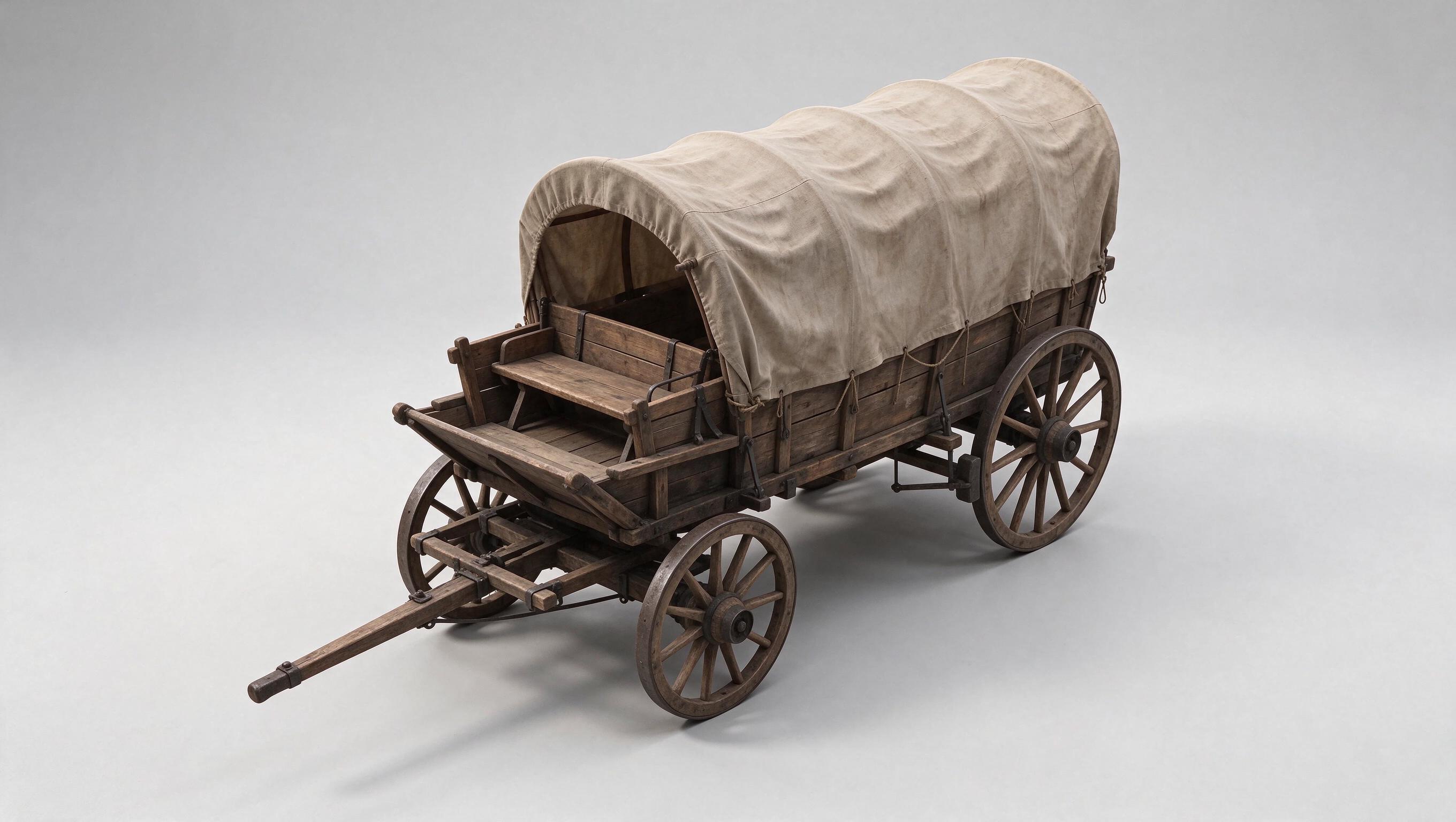
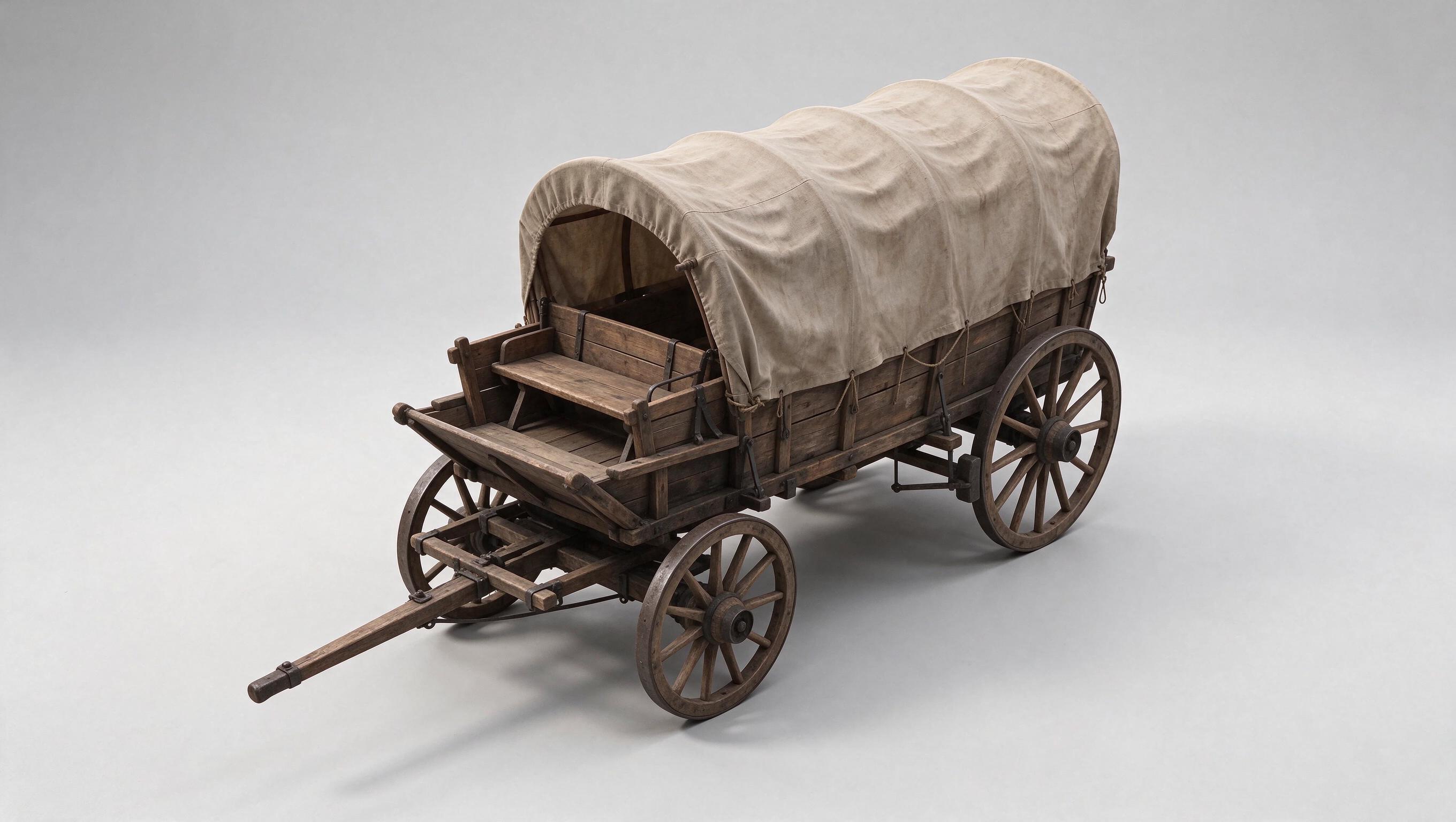
# MEDIEVAL COVERED WAGON — ELEVATED FRONT THREE-QUARTER VIEW Create ONE ultra-photorealistic cinematic studio photograph of the EXACT SAME medieval covered wagon shown in the uploaded reference sheet. This is a new camera angle of an existing approved vehicle, NOT a redesign. **CAMERA — CRITICAL REQUIREMENT** Position the camera slightly above the wagon, looking toward its FRONT from a three-quarter angle. - Camera height approximately 2.5–3 meters above ground. - Camera angled downward approximately 20–25 degrees. - Camera positioned diagonally in front of the wagon, approximately 35–45 degrees from its longitudinal axis. - Show the FRONT and ONE LONG SIDE of the wagon simultaneously. - The front towing drawbar must point generally toward the foreground. - The raised camera must reveal the construction of the driver's seating area. This is NOT a strict frontal view, NOT a rear view and NOT a bird's-eye view. **FRONT STRUCTURE — HIGHEST PRIORITY** The wagon's FRONT is the end with the towing drawbar and the TWO SMALLER wheels. Clearly show: - The wooden driver's bench positioned OUTSIDE and IN FRONT OF the covered passenger compartment. - The complete wooden seating surface and backrest. - The front wooden platform and footrest. - How the driver's bench attaches to the wagon chassis. - The wooden towing drawbar extending forward. - The front axle and its two smaller spoked wheels. - The beginning of the beige canvas canopy directly BEHIND the driver's seat. The rear passenger entrance must remain at the OPPOSITE END of the wagon. Do not place the driver's seat inside the rear passenger opening. **STRICT DESIGN PRESERVATION** Preserve exactly: - Four wooden spoked wheels. - Two smaller front wheels and two larger rear wheels. - Original rectangular weathered wooden body. - Original tall curved beige linen canopy. - Original canopy wrinkles, seams, supporting bows and attachment ropes. - Wooden plank sidewalls. - Original iron reinforcements, hinges, bolts and fittings. - Original wood and canvas colors. - Original wheelbase, body dimensions and vehicle proportions. The vehicle must remain physically identical to the uploaded reference. Do not alter the shape, size, height, width or construction of the wagon. If an attachment detail of the existing driver's bench is unclear, reveal a minimal, physically plausible continuation of the approved structure instead of inventing a new seat. **VISUAL STYLE** Hollywood Cinematic Hyperrealism, Live-Action Feature Film, Ultra-Realistic Cinematic Photography. ARRI Alexa 35 visual aesthetics, Cooke S4/i lens characteristics, Kodak Vision3-inspired organic color grading. Extremely realistic aged wood, natural linen canvas, weathered iron, coarse rope fibers and practical mechanical construction. The wagon must look like a genuine full-scale practical movie prop photographed in a professional studio, not a CGI render or a video-game asset. **BACKGROUND AND COMPOSITION** Uniform neutral light-gray studio background (#E5E5E5). Soft, even professional studio lighting. Natural contact shadows beneath the wheels. Horizontal 16:9 composition. Show the COMPLETE wagon, including the entire drawbar, canopy, driver's bench and all four wheels. Leave comfortable margins around the vehicle. Exactly ONE wagon. No people, children, horses, roads, landscapes, additional vehicles, text, labels or watermarks. **FINAL REQUIREMENT** A clear, slightly elevated FRONT THREE-QUARTER camera view showing the existing driver's bench, front towing structure and covered wagon body together. Maintain the exact same vehicle identity and construction as the uploaded reference. Camera-angle accuracy and design consistency are more important than creativity.

Бесплатный старт · Генерация видео и картинок с ИИ за секунды
More from this creator
More Seedream 5.5 images
См. все →