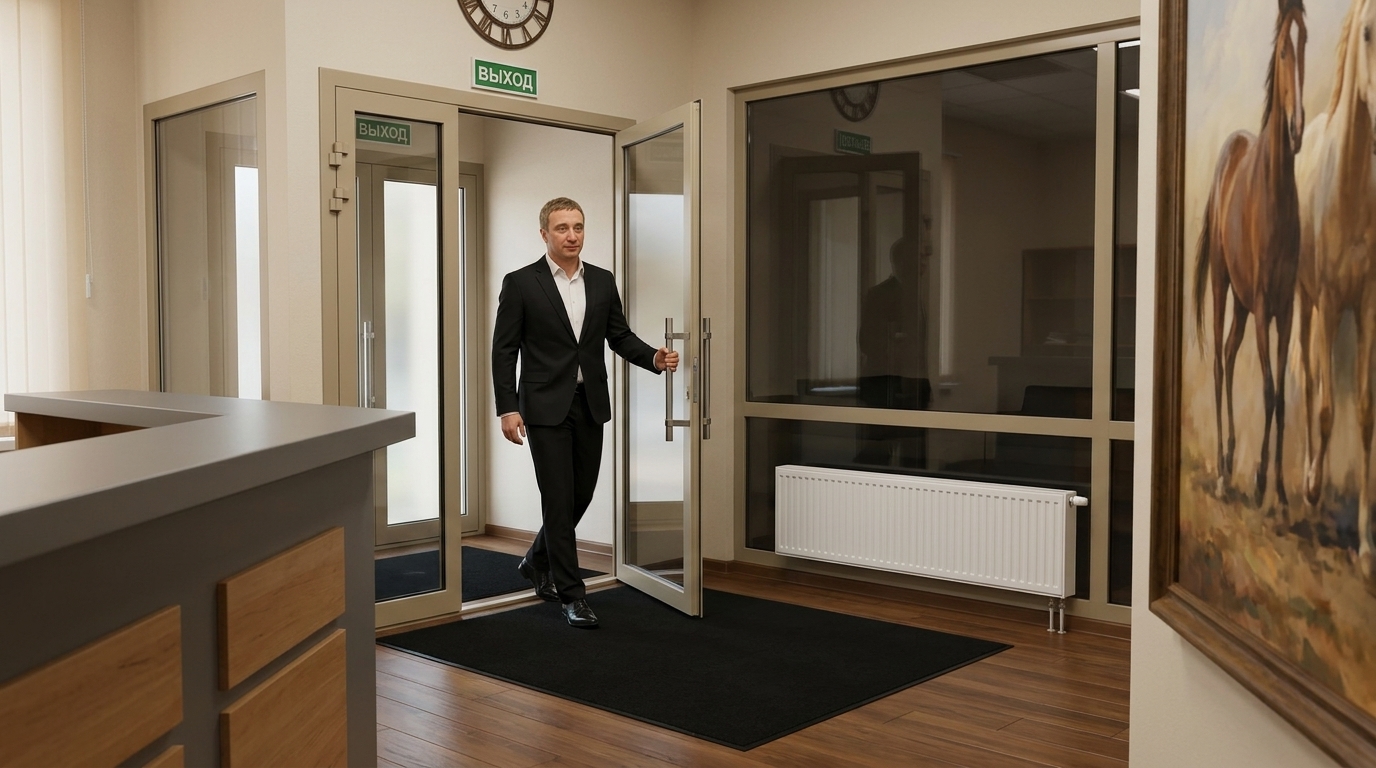
Image - 2026-11-28 11:04
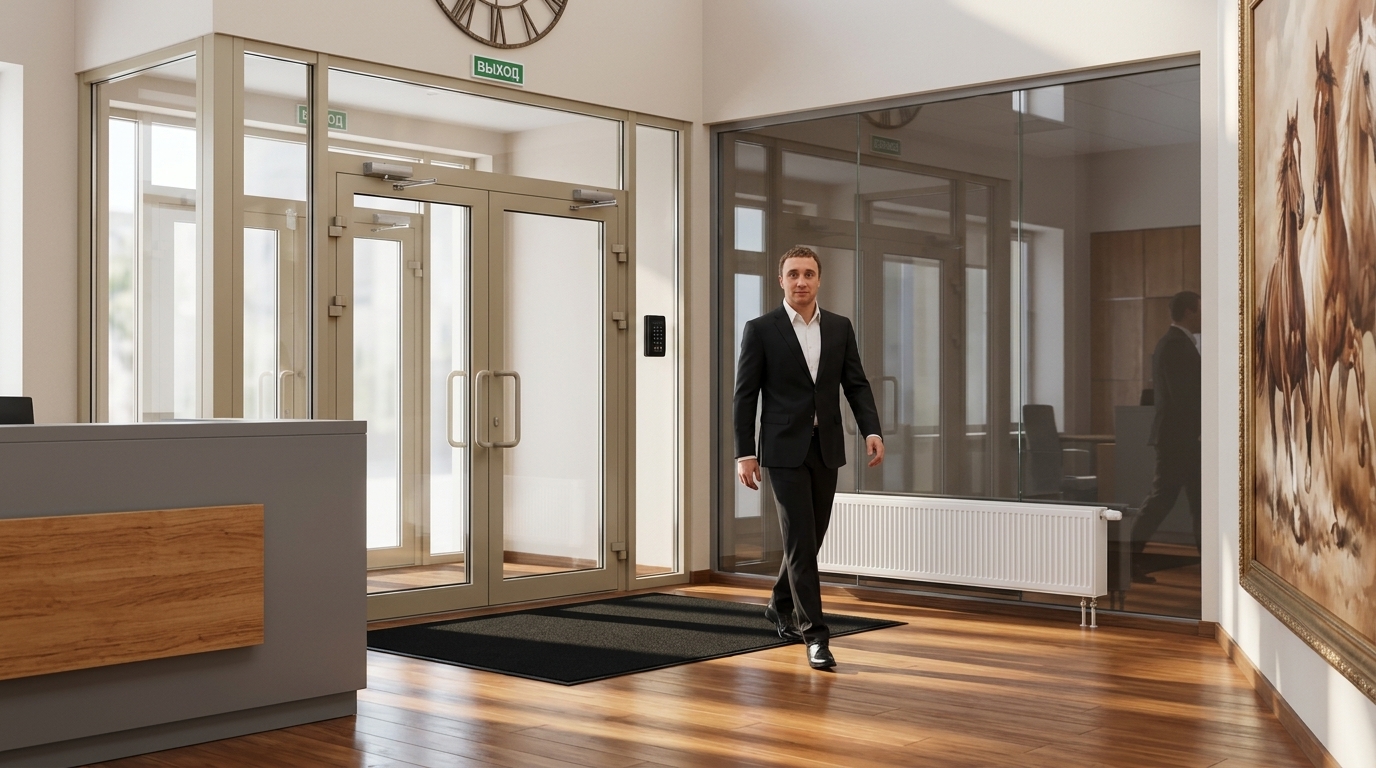
Art style: Stylized Cinematic 3D — реалистичная кинематографичная 3D-анимация с умеренной художественной стилизацией, единый визуальный стиль во всех сценах, естественные пропорции, мягкий выразительный свет. # PRECISE IMAGE EDITING — ABSOLUTE SCENE PRESERVATION **TASK:** Edit the provided original office interior image by adding Alexander Alexandrovich entering through the existing entrance doors. Preserve the entire original environment and camera composition with extremely high fidelity. **FORMAT:** Horizontal 16:9, premium Stylized Cinematic 3D, realistic cinematic rendering with restrained artistic stylization. **REFERENCE HIERARCHY:** REFERENCE IMAGE 1: The APPROVED EMPTY OFFICE INTERIOR. This is the absolute master reference for the composition, architecture, camera position, perspective, geometry, lighting and every background object. REFERENCE IMAGE 2: The ALEXANDER ALEXANDROVICH CHARACTER REFERENCE SHEET. This defines the character's exact identity, face, body proportions, hairstyle, age and clothing. The character reference must not influence the architecture. The office reference must not alter the character's identity. **THIS IS A LOCAL IMAGE EDIT, NOT A NEW SCENE GENERATION.** The target is the original office image with only two changes: one existing door leaf is naturally opened, and Alexander Alexandrovich is entering through that doorway. Everything outside the doorway and character area must remain visually identical to Reference Image 1. ## 1. ABSOLUTELY LOCK THE ORIGINAL CAMERA Keep the exact original camera position, orientation, focal length, field of view, camera height, framing and perspective of Reference Image 1. The camera is INSIDE the office lobby, positioned toward the RIGHT side of the room, observing the entrance from an oblique angle. The entrance is LEFT OF CENTER. The large glass partition, radiator and horse painting occupy the RIGHT side of the composition. The reception counter dominates the LEFT FOREGROUND. Maintain the original asymmetric spatial composition. Do not reinterpret the camera angle. Do not create a new wide-angle architectural photograph. Do not move the viewpoint farther left, farther right, higher, lower, closer or farther away. Preserve the exact perspective lines of the wooden floor, glass partitions, walls and door structure. **The existing architecture must remain fixed in the image. Only the person and one moving door leaf may change.** ## 2. EXACT ARCHITECTURE — PRESERVE ALL SPATIAL RELATIONSHIPS The original scene contains a compact rectangular entrance vestibule projecting slightly into the office lobby. Its beige-framed double glass doors are located in the left-central area of the image. The vestibule is NOT a large freestanding glass cube. It is NOT a revolving door. It is NOT a new glass corridor. It must retain exactly the same shape, width, height, depth, proportions and orientation as in Reference Image 1. The surrounding glass wall extends horizontally behind the entrance vestibule. The vestibule remains visually integrated into the existing wall architecture. Keep all original metal framing, horizontal edges, hinges, locks, handles, door closers and glass reflections. The vertical and horizontal architectural lines must remain in the exact same positions. ## 3. DOOR MECHANICS — VERY IMPORTANT Reproduce the original closed double-door construction from Reference Image 1 before introducing any movement. The doors have two rectangular glass leaves within one existing beige metal frame. Each leaf has a large glass panel and a correctly positioned vertical metal pull handle. The leaves meet at their original central seam. Do not increase the number of doors. Do not create additional glass frames. Do not change the vestibule's outer dimensions. Open ONLY ONE of the original door leaves approximately 35–45 degrees into the lobby. The open leaf rotates naturally around its ORIGINAL hinge line. The door's frame, handle, hinges, overhead closer and opening direction must form one mechanically correct construction. The other door leaf remains completely closed in its original position. The opened door must NOT face the camera frontally unless that orientation follows naturally from its original hinges. The opening must not change the shape or depth of the vestibule. The wall, fixed glass panels and surrounding door frame remain stationary. No displaced handles, floating glass, detached hinges, duplicated door leaves or impossible door geometry. ## 4. RECEPTION COUNTER — EXACT PRESERVATION On the lower-left foreground, preserve the original large angular reception counter. It has a broad flat matte-gray horizontal top, thick gray outer surfaces, and a recessed natural wood panel on the front. Keep its exact size, cropping, shape, angle and location. The original counter extends outside the left boundary of the frame. Do not reconstruct it as a small standalone desk. Do not turn it into a tall rectangular cabinet. Do not change the surface material or geometry. ## 5. RIGHT GLASS WALL AND RADIATOR Immediately to the RIGHT of the entrance vestibule is the original large rectangular glass partition. This glass surface covers a substantial area of the right-central background. Preserve its exact beige framing, dimensions, transparency, moderately dark reflections and the visible interior beyond the glass. Do not turn this area into a completely black reflective wall. Do not add additional office doors, hallways or furniture behind the partition. A long white horizontal radiator is mounted BELOW this glass partition. Keep the radiator exactly where it is in Reference Image 1. Preserve its length, height, horizontal alignment, wall mounting, proportions and appearance. Do not move the radiator closer to the floor or toward the doors. ## 6. HORSE PAINTING — EXACT POSITION At the extreme RIGHT edge is a very large vertically oriented framed painting depicting horses in warm brown, beige, cream and muted green tones. The painting is deliberately cropped by the image boundary. Only part of the painting and its frame are visible. It must remain enormous in relation to the scene. Do not shrink it. Do not make the complete painting visible. Do not move it to another wall. Keep the exact original crop, colors, perspective and frame. ## 7. CEILING, CLOCK AND SIGNS The upper part of the original image contains a plain light-colored wall. At the top edge, only partial decorative clock numerals are visible, including mixed Roman and Arabic numerals. Keep the original partial crop. Do not generate a complete circular clock face. Two small GREEN rectangular signs with the exact Russian word "ВЫХОД" are positioned vertically, one above the other, above the entrance area. Both signs must remain in their original positions. Do not move them directly onto the vestibule. Do not replace them with one large exit sign. Preserve the original wall geometry and light distribution. ## 8. FLOOR, MAT AND LIGHTING Preserve the natural warm brown wooden flooring, long plank texture and exact original perspective. The floor extends continuously from the bottom of the frame toward the entrance. The rectangular black floor mat lies in front of and partly beneath the entrance area. Keep the mat's exact size, orientation and position. Maintain the original soft warm daylight, natural reflections, gentle shadows and bright but realistic atmosphere. Do not change the time of day. Do not darken the entire scene. Do not introduce dramatic sunlight beams or exaggerated reflections. ## 9. CHARACTER IDENTITY — ALEXANDER ALEXANDROVICH Add exactly ONE male character, Alexander Alexandrovich, using Reference Image 2 as the strict character identity source. His face must match the approved character reference sheet, not an invented or idealized office employee. Preserve the exact recognizable facial identity: Short naturally textured light-brown hair, characteristic forehead, realistic eyebrows, light blue-gray eyes, distinctive nose, cheekbones, lips, jawline, ears, facial proportions, natural skin texture and apparent age. Maintain his realistic adult body proportions and natural build. No enlarged cartoon eyes, oversized head, exaggerated smile, artificial skin or generic handsome facial features. The established appearance is realistic Stylized Cinematic 3D, with subtle artistic treatment rather than overt cartoon styling. He wears a well-fitted black or dark charcoal business suit, white shirt with open collar, matching trousers and polished black leather shoes. Preserve the suit cut, body proportions and natural fabric folds shown in the character sheet. ## 10. EXACT CHARACTER PLACEMENT Alexander must be positioned inside the EXISTING doorway, LEFT OF THE IMAGE CENTER. His body should be located approximately around 35–40% of the image width, adjusted to fit the actual original door opening. He must NOT stand beside the glass partition or radiator. He must NOT occupy the central-right floor area. His entire body must be visible, from head to shoes. Alexander is entering the office from behind the existing doors. One foot has just crossed the threshold onto the black entrance mat while the other foot is naturally following. His torso faces generally into the office, with a slight natural three-quarter rotation. He does not need to look directly into the camera. He looks calmly toward the reception area with a subtle, friendly expression. His right hand may gently hold the handle of the opened door, but ONLY if that hand position is anatomically natural and mechanically consistent with the original door. Correct door geometry and authentic character placement are more important than forcing a specific hand gesture. His left arm hangs naturally. His posture communicates calm confidence, as though he has just arrived at work. He is NOT posing for a portrait. He is NOT standing motionless in the center of the room. The character must look naturally integrated into this exact office, with correct scale, contact shadows, lighting direction and perspective. ## 11. VISUAL STYLE Professional cinematic 3D rendering, realistic materials, subtle artistic stylization, natural human anatomy, realistic facial textures, soft global illumination, detailed glass reflections, authentic architectural perspective and consistent depth. Preserve the original office's visual style and lighting. Do not apply an entirely new color grade. Do not redesign or modernize the environment. The final image should look like an additional frame from the SAME ORIGINAL SCENE, filmed by the SAME CAMERA, with the SAME OFFICE ARCHITECTURE. ## 12. ABSOLUTE NEGATIVE CONSTRAINTS No camera repositioning. No changed perspective. No frontal redesign of the entrance. No large freestanding glass cube. No extra vestibule. No revolving doors. No additional door leaves. No new architectural elements. No duplicated frames or handles. No changes to the reception counter. No dark glass wall replacement. No relocated radiator. No resized painting. No new furniture. No altered clock. No changed exit signs. No new hallways. No generic character face. No cartoon proportions. No duplicated people. No distorted hands. No impossible door mechanics. No extra reflections of invented people. No inset reference thumbnails. No UI elements. No animation buttons. No orange overlays. No watermarks. ## FINAL PRIORITY ORDER 1. Exact preservation of the original office image and camera perspective. 2. Exact preservation of the original door and vestibule geometry. 3. Accurate character identity from Alexander Alexandrovich's reference sheet. 4. Correct physical integration of Alexander into the doorway. 5. A naturally opened single door leaf. 6. Consistent cinematic lighting and rendering quality. **FINAL RESULT:** The exact approved office lobby image, with Alexander Alexandrovich entering through one original glass door. The architecture, perspective, furniture, background and lighting must remain unchanged. No reinterpretation, no redesign, no new camera angle. ━━━━━━━━━━━━━━━━━━━━━━━━━━━━━━━━━━━━━━ FINAL STYLE ENFORCEMENT (this is the authoritative rendering directive — it overrides any style wording elsewhere in the prompt): Render this image entirely in "Stylized Cinematic 3D — реалистичная кинематографичная 3D-анимация с умеренной художественной стилизацией, единый визуальный стиль во всех сценах, естественные пропорции, мягкий выразительный свет" style. Match the lighting grammar, material response, colour science, level of realism / stylisation, line weight, and shading model typical of "Stylized Cinematic 3D — реалистичная кинематографичная 3D-анимация с умеренной художественной стилизацией, единый визуальный стиль во всех сценах, естественные пропорции, мягкий выразительный свет". Keep the subject, composition, camera angle, lighting direction, and colour palette from the description above — but EVERY surface, skin, fabric, material, and environmental element must be rendered in the "Stylized Cinematic 3D — реалистичная кинематографичная 3D-анимация с умеренной художественной стилизацией, единый визуальный стиль во всех сценах, естественные пропорции, мягкий выразительный свет" idiom, not in any other medium.

Бесплатный старт · Генерация видео и картинок с ИИ за секунды
More from this creator
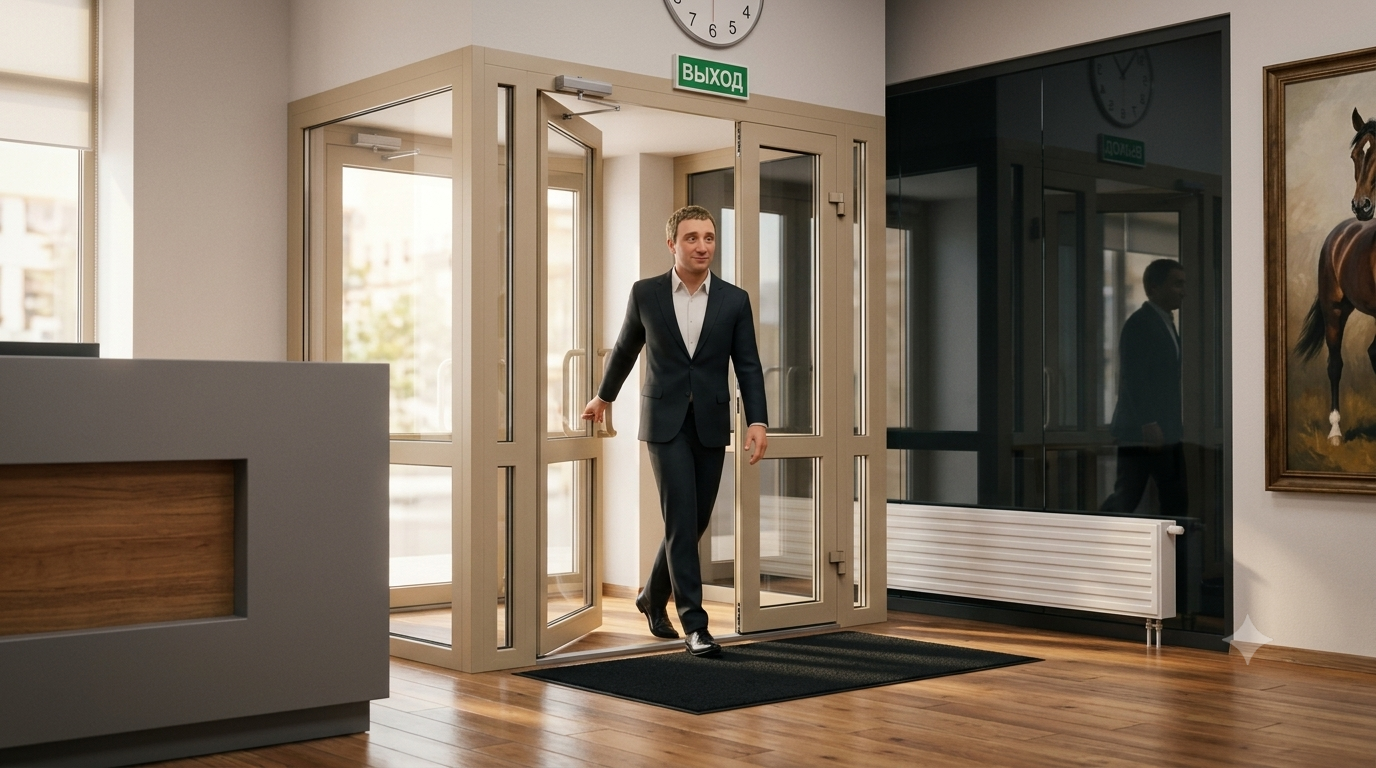
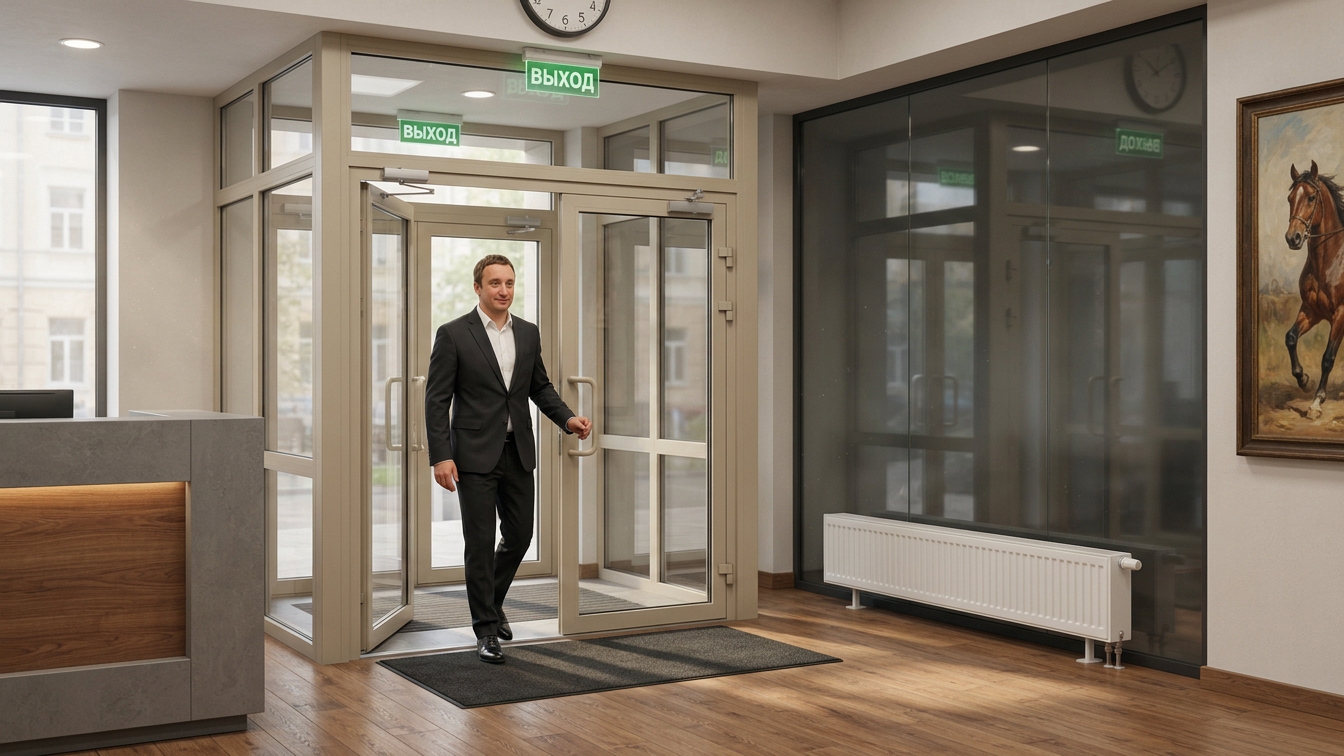
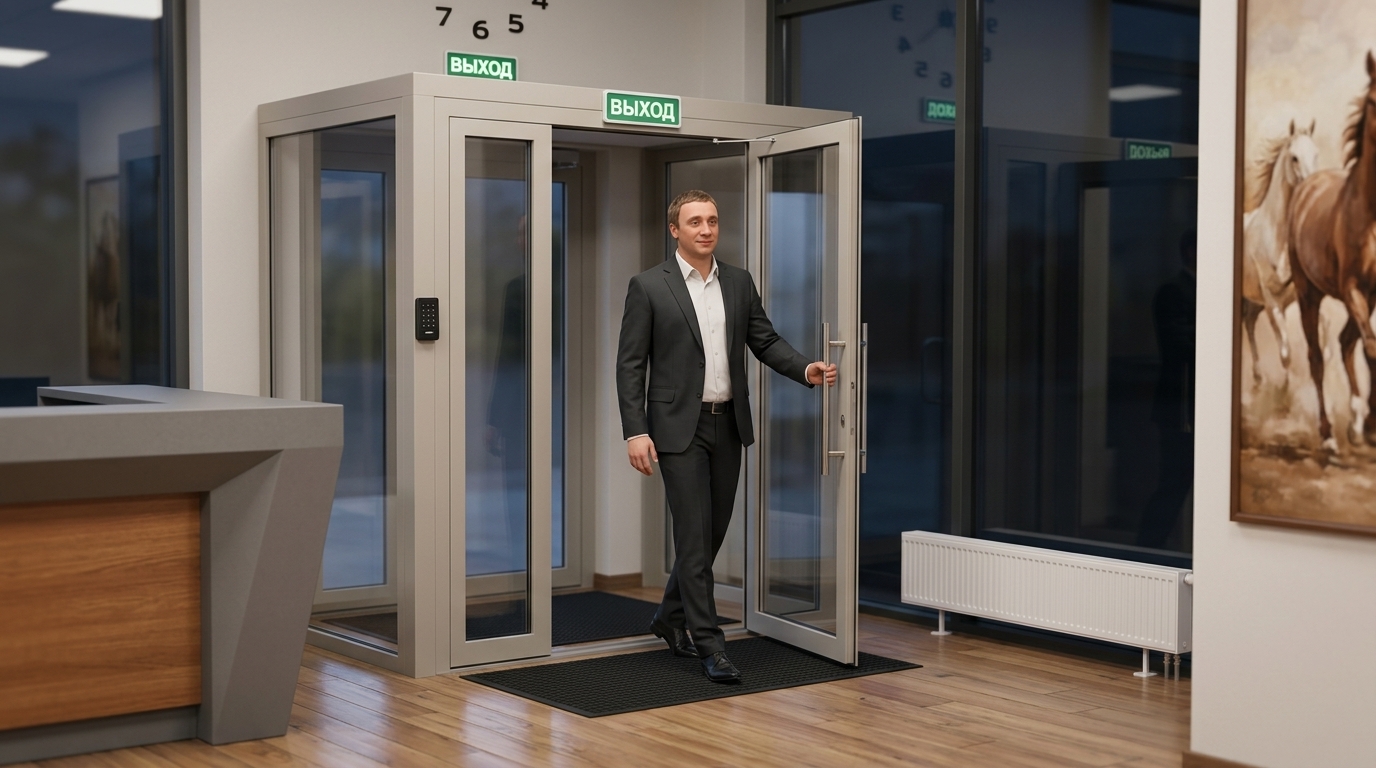
More Gemini 3.1 Flash Image images
См. все →