Image - 2026-11-25 19:07
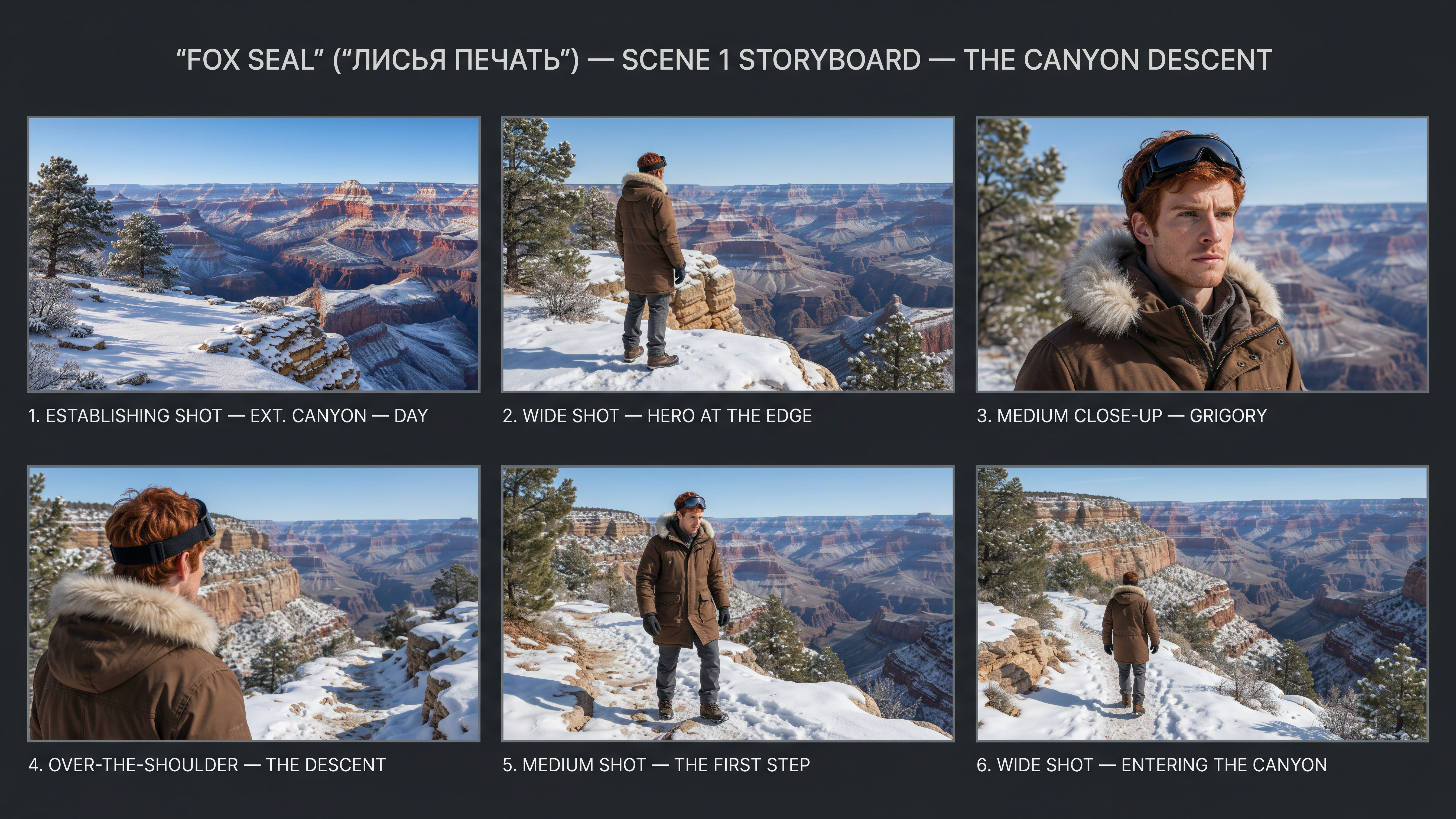
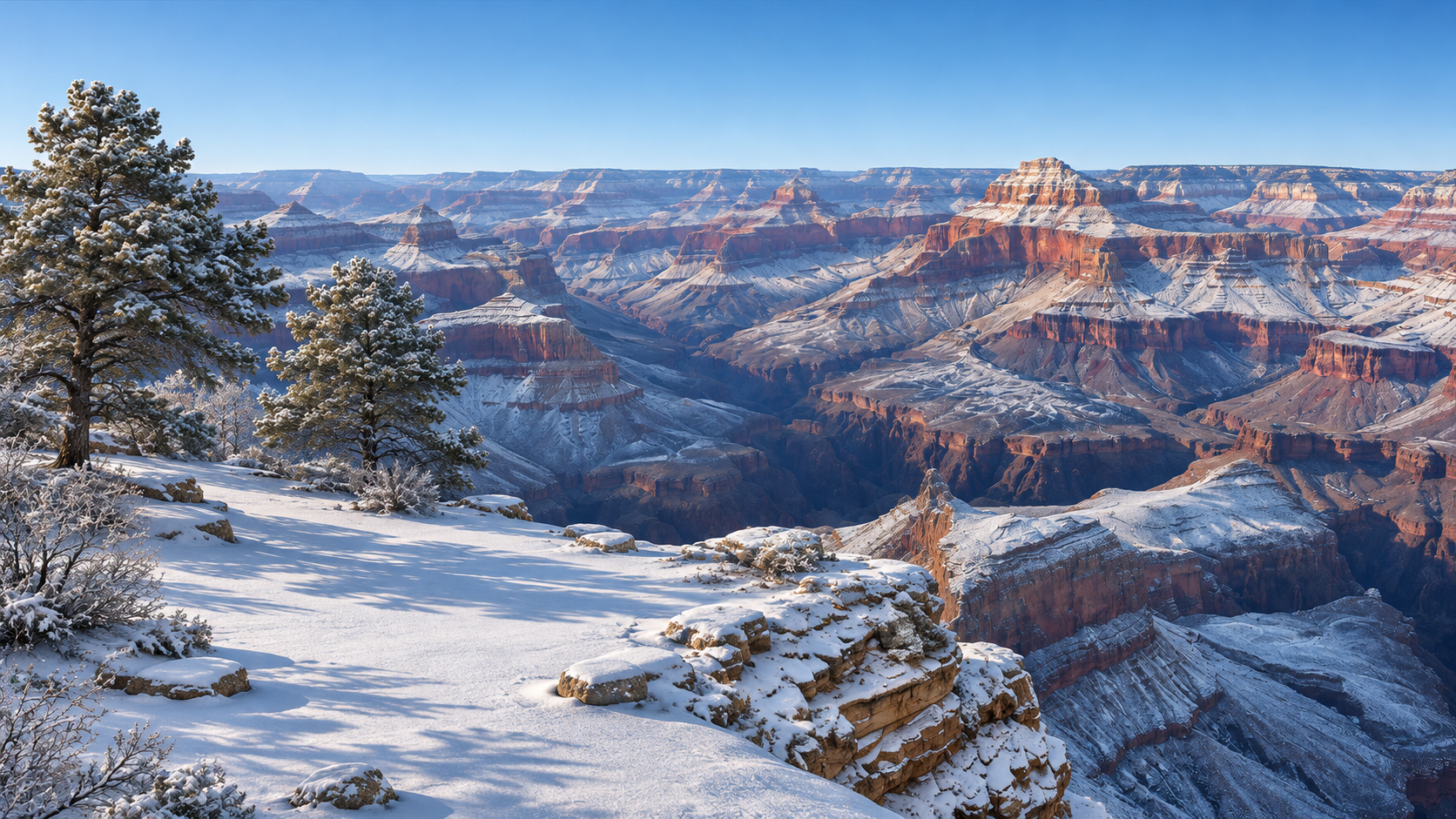
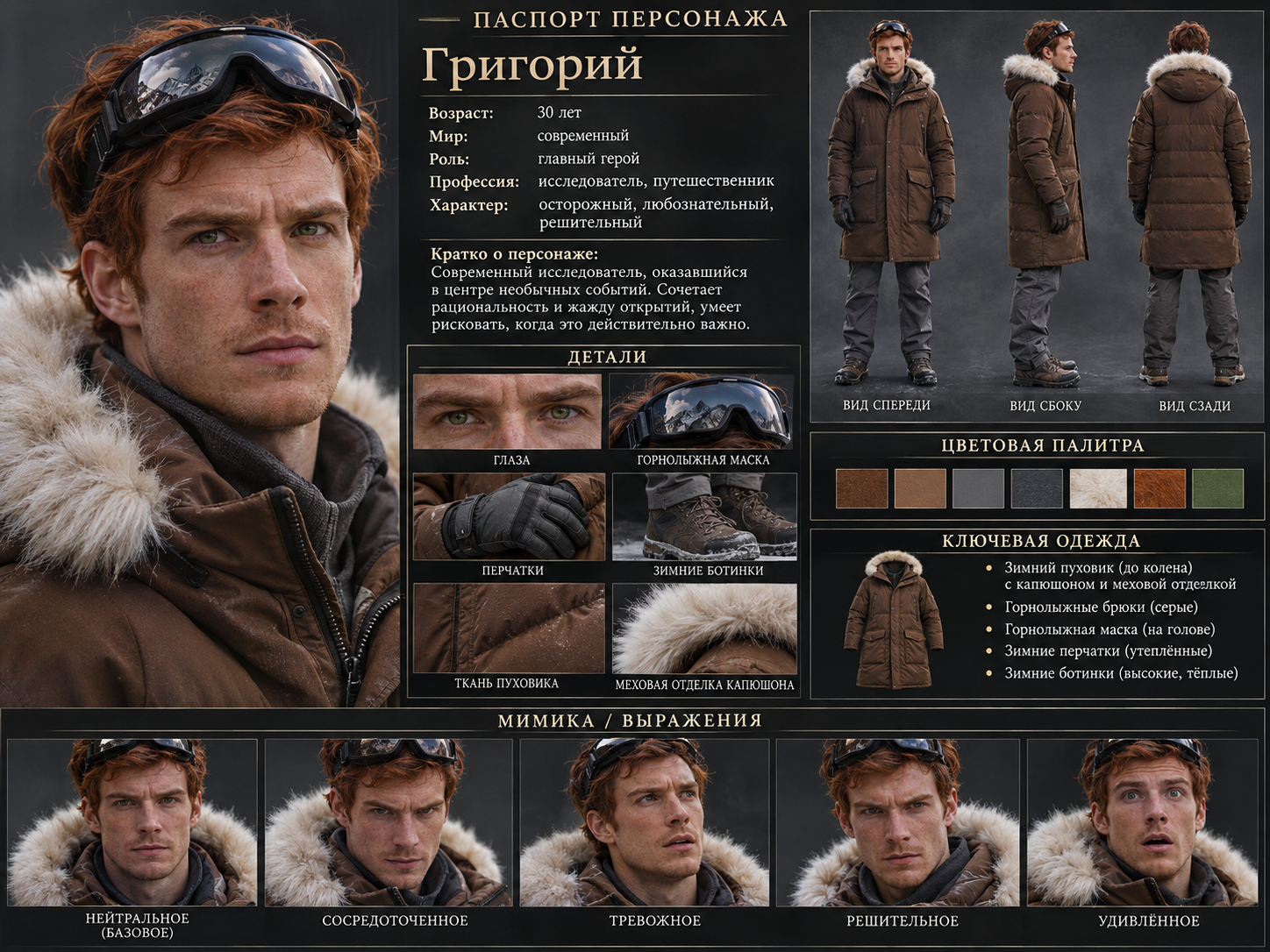
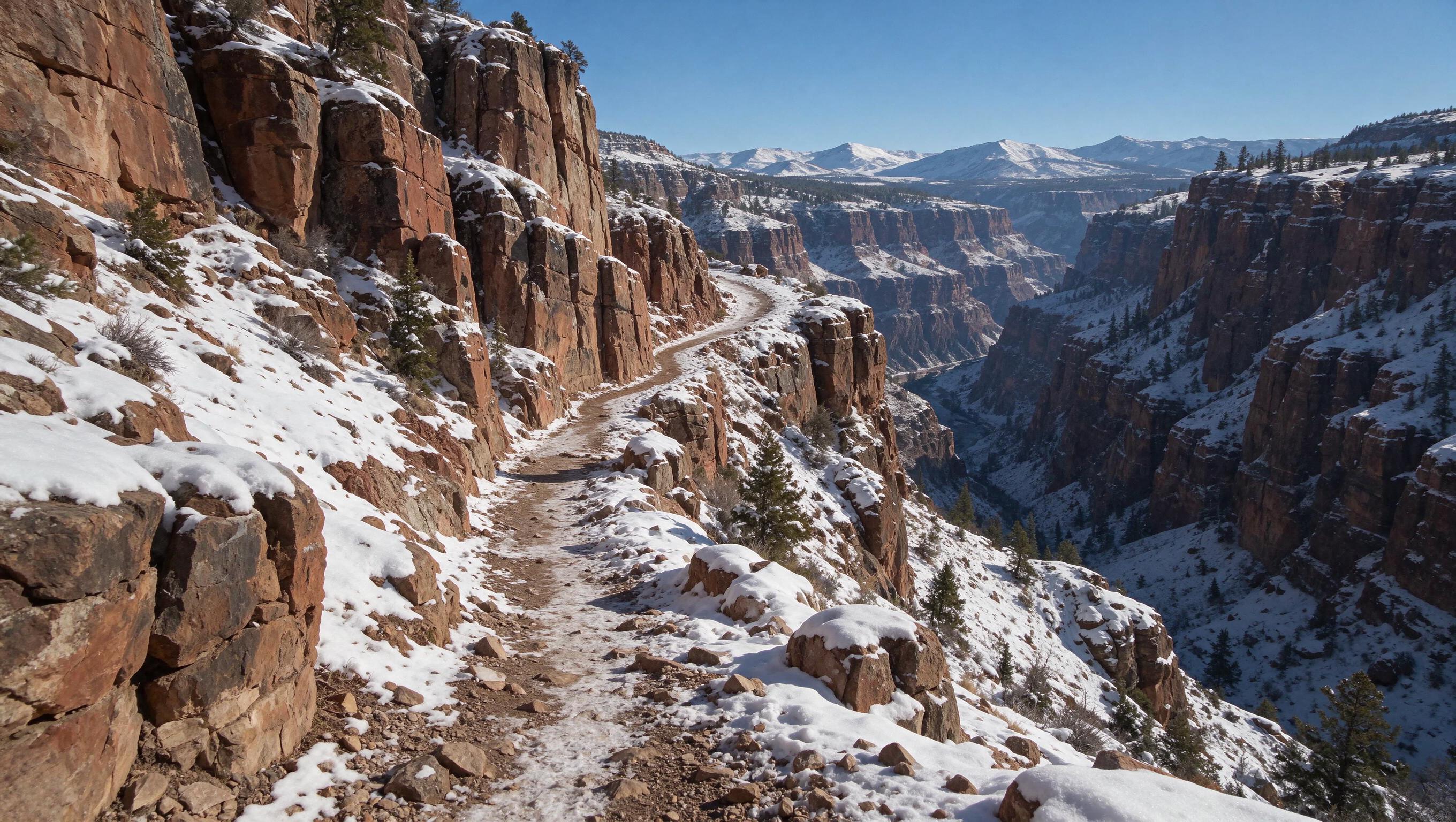
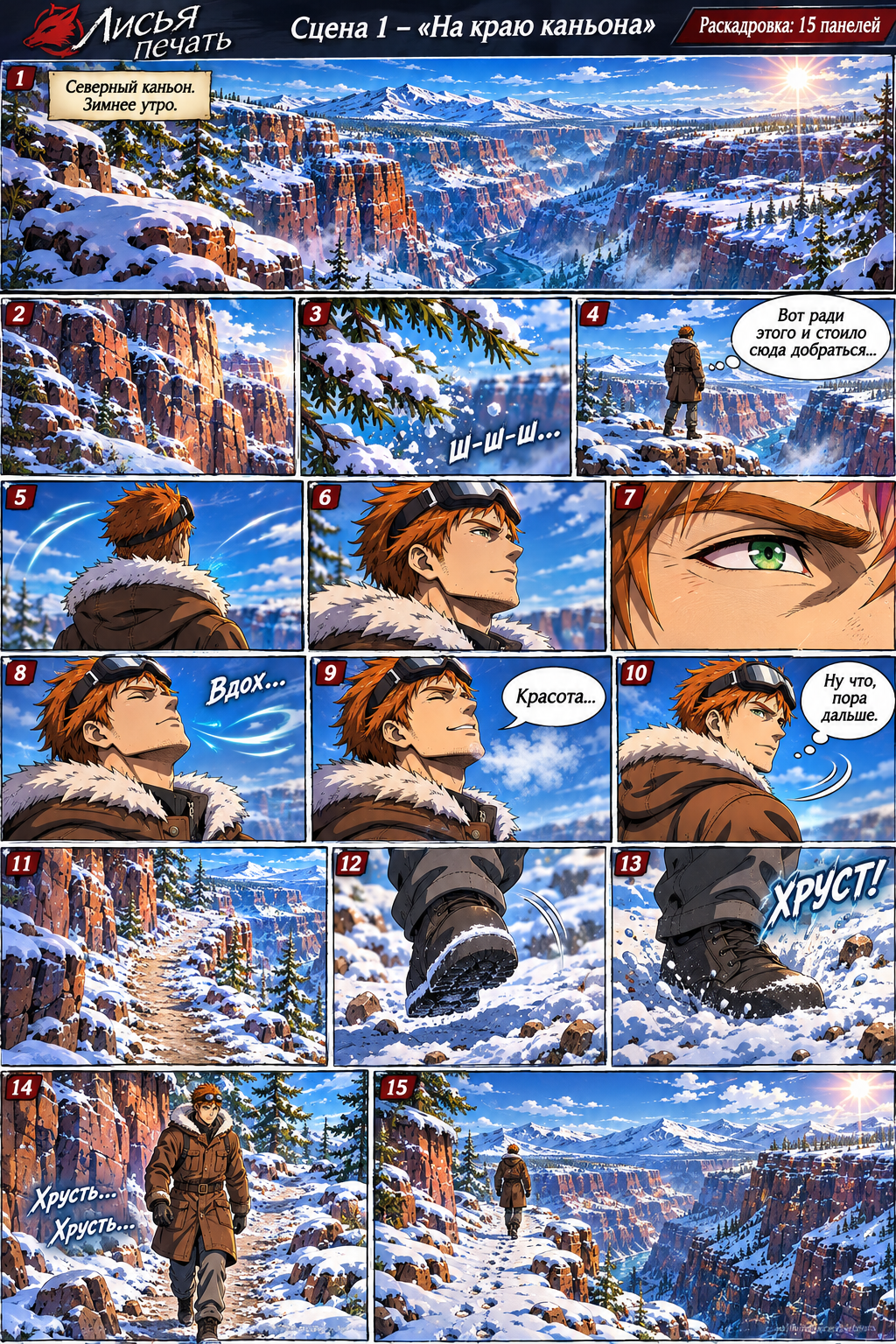
Make the result look like a professionally shot live-action film storyboard, not like AI concept art.Create a single storyboard sheet for Scene 1 of the live-action film “Fox Seal” (“Лисья печать”). IMPORTANT: Use the uploaded references as follows: - Reference 1 = Grigory, the main character. Preserve his identity, face, hairstyle, age, clothing, proportions and overall live-action appearance. - Reference 2 = the main canyon location. Preserve the visual logic of the snowy canyon, its red-brown geology, winter atmosphere, scale, blue sky, snowy ground, trees and natural terrain. GOAL: Generate one single image containing 6 separate storyboard frames from Scene 1. The result must look like six photorealistic film stills from the same high-budget live-action movie, arranged neatly on one sheet. Preferred layout: 2 rows × 3 columns. Each frame must be clearly separated. Small frame numbers 1–6 in corners are allowed. No comic bubbles, no manga style, no poster style, no heavy graphic design. This is a cinematic storyboard sheet made of realistic movie stills. STYLE: High-end live-action cinematic realism. Hollywood cinematic hyperrealism. The image must look like real frames from a professional feature film, not illustration, not CGI, not AI art, not concept art. Ultra-realistic cinematic photography. Natural physical textures. Subtle filmic color grading. Natural winter daylight. Physically plausible light and shadows. Organic cinematic image. No plastic look. No fake smoothness. No oversharpening. No visual noise. No surreal artifacts. No painterly textures. IMAGE QUALITY: Extremely high detail, but natural. Realistic snow, rock, skin, hair, fabric, trees and atmosphere. Authentic geological structure in the canyon. Natural atmospheric perspective in the distance. Realistic depth of field depending on shot size. No distorted anatomy. No duplicate objects. No warped hands. No broken perspective. CAMERA / FILM LOOK: Make the shots feel as if captured on a professional cinema camera similar to ARRI Alexa 35 with high-end cinema lenses. Organic contrast, subtle film grain if needed, realistic exposure, natural highlight rolloff. Do not stylize like a poster or a videogame. This must feel like a real movie. CHARACTER: Grigory, male, around 30 years old. Short red hair. Green eyes. Ski goggles resting on his head. Brown parka reaching about the knees, with white fur trim. Gray pants. Gloves. Winter boots. No hat. He must look like a believable live-action actor. His face and clothing must remain consistent across all 6 frames. LOCATION: A vast winter canyon. Clear cold day. Blue sky. Red-brown layered rock formations. Snow on ledges, ground, bushes and rocks. Conifer trees and dry winter shrubs. The location must remain coherent across all frames and feel like one real place. No fantasy elements. No magic. No ruins. No buildings. No ropes. No ladders. No fences. No animals. No extra characters. NARRATIVE FUNCTION: This is Scene 1 — the introduction. The scene should introduce the location, the hero, and the beginning of his descent. Each frame must capture only the start of an action or a held cinematic moment. Do not show full complex motion. These are stop-frames that will later be animated separately. VISUAL CONTINUITY RULES: - Keep the same daylight conditions throughout all 6 frames. - Keep the same winter environment. - Keep the same actor identity and costume. - Keep the geography believable from shot to shot. - The canyon should feel like the same place seen from connected cinematic angles. - Grigory must remain the same person in every frame. - The frames must feel like a continuous opening scene from one movie. SHOT LIST — SCENE 1 (6 FRAMES): FRAME 1 — ESTABLISHING SHOT A very wide establishing shot of the snowy canyon. Grand panoramic view. Foreground includes snowy ground and natural trees. The canyon dominates the scene with strong scale and depth. Red-brown geological formations and snow-covered surfaces under a clear blue sky. This frame introduces the location. Grigory may be absent or extremely small and secondary. FRAME 2 — HERO AT THE EDGE Medium-wide or wide shot of Grigory standing near the canyon edge. View from behind or back 3/4 angle. He is looking into the distance. His brown parka, white fur trim, gray pants, gloves, boots, ski goggles and red hair are clearly visible. The canyon remains visible around him. This frame introduces the hero in the location. FRAME 3 — CLOSE CHARACTER INTRODUCTION Medium close-up or close-up of Grigory. 3/4 angle. Serious, focused, thoughtful expression. Green eyes visible. Red hair visible. Ski goggles on the head. Natural winter light on the face. Possibly very subtle visible breath in cold air. The background should softly connect to the canyon environment. FRAME 4 — HE SEES THE DESCENT Over-the-shoulder or semi-wide shot. Grigory is in the foreground. Below him or ahead of him the beginning of the narrow descending trail becomes visible. The viewer understands this is the route he will take next. The trail must look natural, mountain-formed, uneven and realistic. FRAME 5 — THE DECISION / FIRST STEP Medium or wide shot. Grigory stands at the beginning of the descent and starts moving. Show only the beginning of a step, not active full walking. A subtle decision moment. The trail and canyon remain clearly readable. This frame should communicate that he has chosen to go down. FRAME 6 — ENTERING THE DESCENT Wide rear shot. Grigory is already a little farther along the narrow descending trail. Camera remains behind him and slightly above or at a natural cinematic distance. The trail, the hero and the canyon depth must all read clearly. This is the final frame of Scene 1 and should naturally lead into Scene 2, where the descent continues. COMPOSITION RULES: - All 6 frames must be cinematic and readable. - Vary shot sizes naturally: wide, medium-wide, close-up, over-shoulder, wide. - Keep strong cinematic composition. - Avoid empty meaningless frames. - The character should not randomly switch sides without reason. - Preserve believable spatial continuity. TRAIL REQUIREMENTS: The descending trail must look realistic and naturally integrated into the mountain terrain. It must not look artificially carved, too smooth, too symmetrical, or like a perfect CGI road. Edges must be irregular and natural. Add believable gravel, compacted dirt, scattered stones, uneven snow, and realistic mountain wear. Keep the trail narrow and grounded. ROCK / SNOW / TREE REALISM: - Rocks must look naturally eroded, stratified and geologically believable. - Snow must have natural wind-shaped accumulation, thickness variation and believable contact with rocks and shrubs. - Trees must have realistic branch structure and natural winter form. - Remove any artificial micro-detail noise or plastic texture feel. FORBIDDEN: No anime. No comic style. No illustration look. No painterly style. No fantasy magic. No giant title text. No dialogue balloons. No extra people. No fox statue. No cave interior. No modern objects except the character’s outfit and goggles. No plastic or game-like rendering. No deformed face or hands. No inconsistent wardrobe. No random changes in canyon geology. FINAL REQUIREMENT: The final output must be one single storyboard image containing 6 photorealistic live-action frames from the same movie scene. It must feel like the opening scene of a serious high-budget winter adventure mystery film. сделай одну картинку с 6 кадрами

Бесплатный старт · Генерация видео и картинок с ИИ за секунды
More from this creator
More Kie.ai images
См. все →