Image - 2026-11-22 00:33
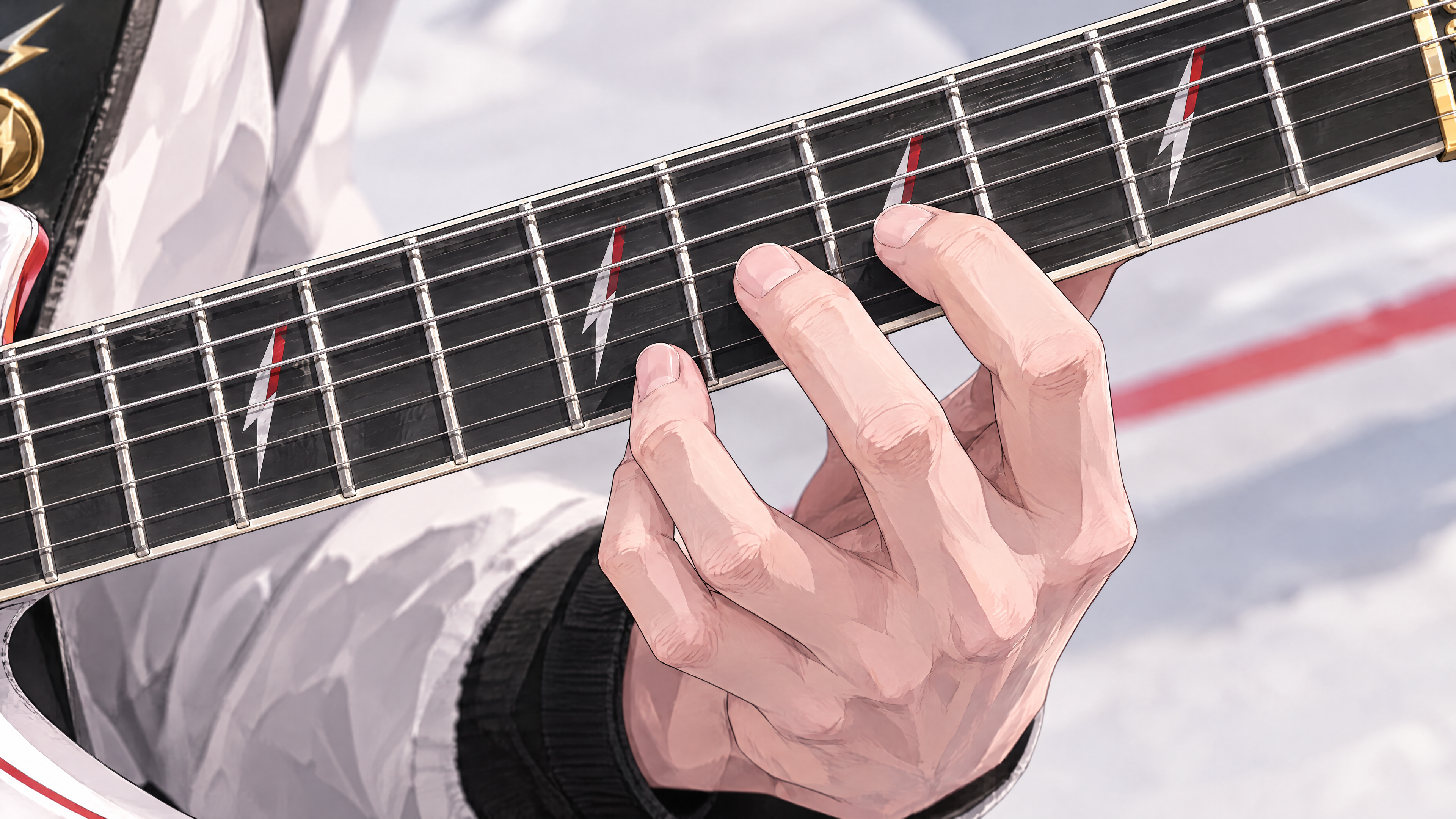
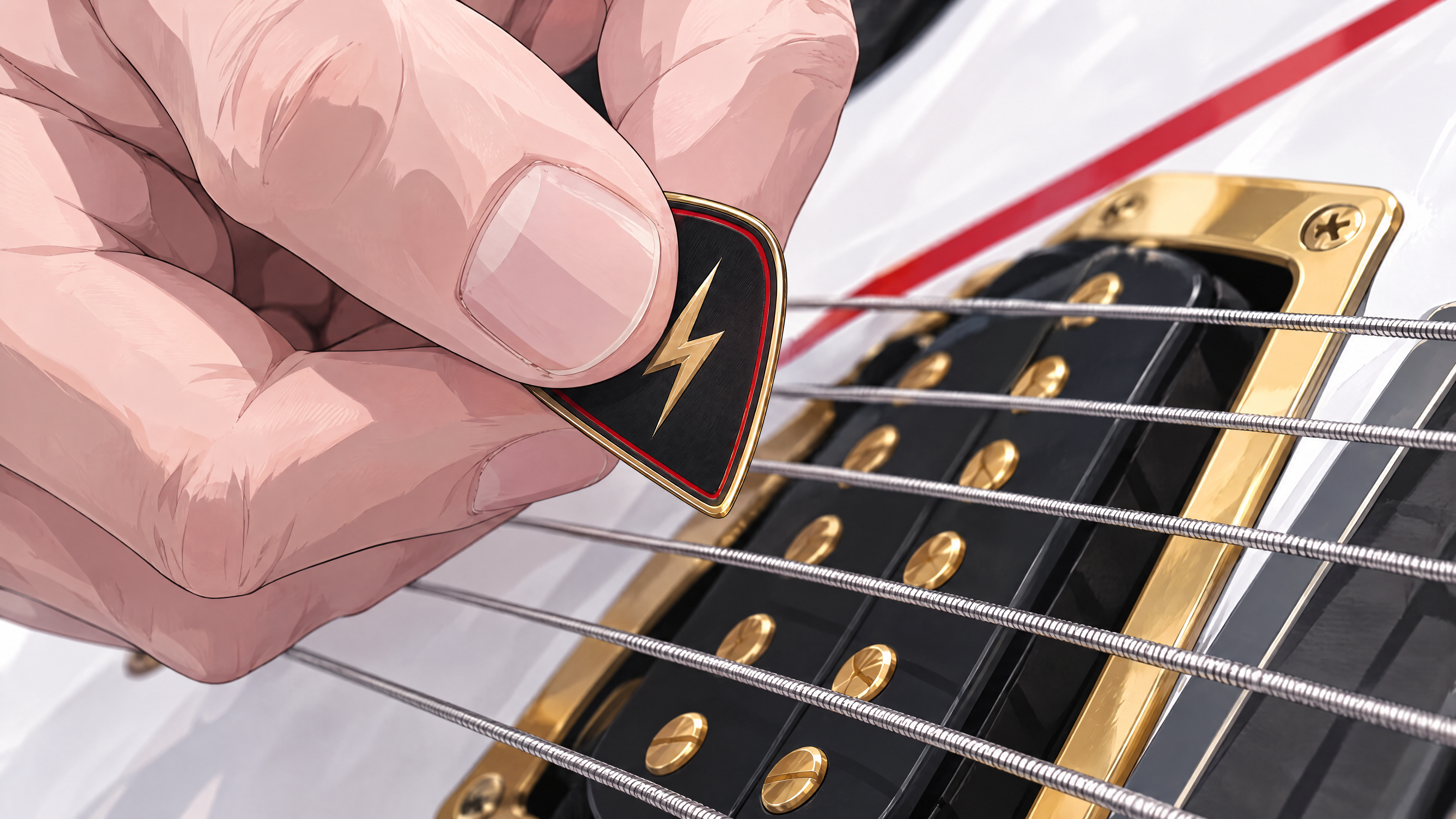
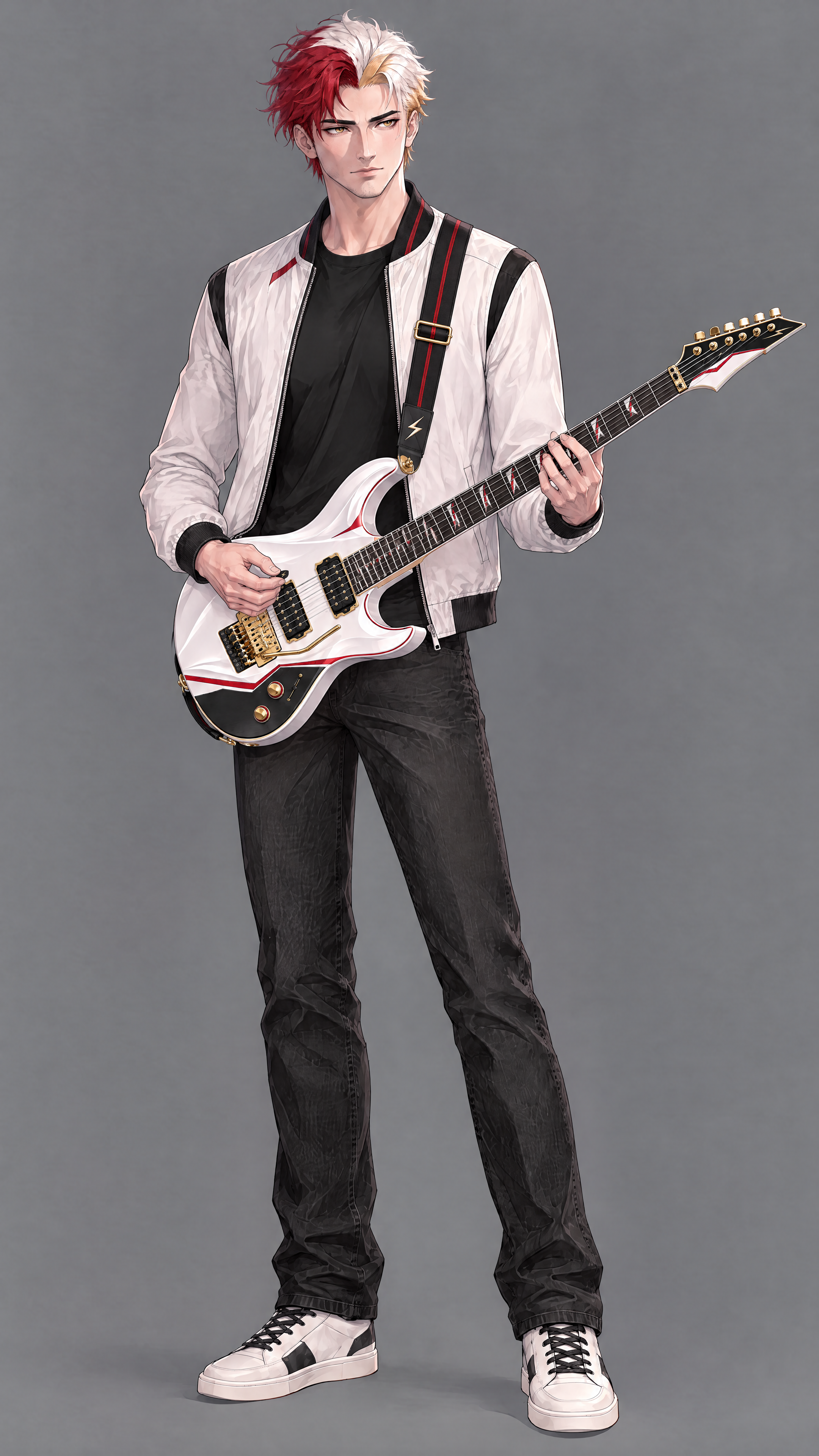
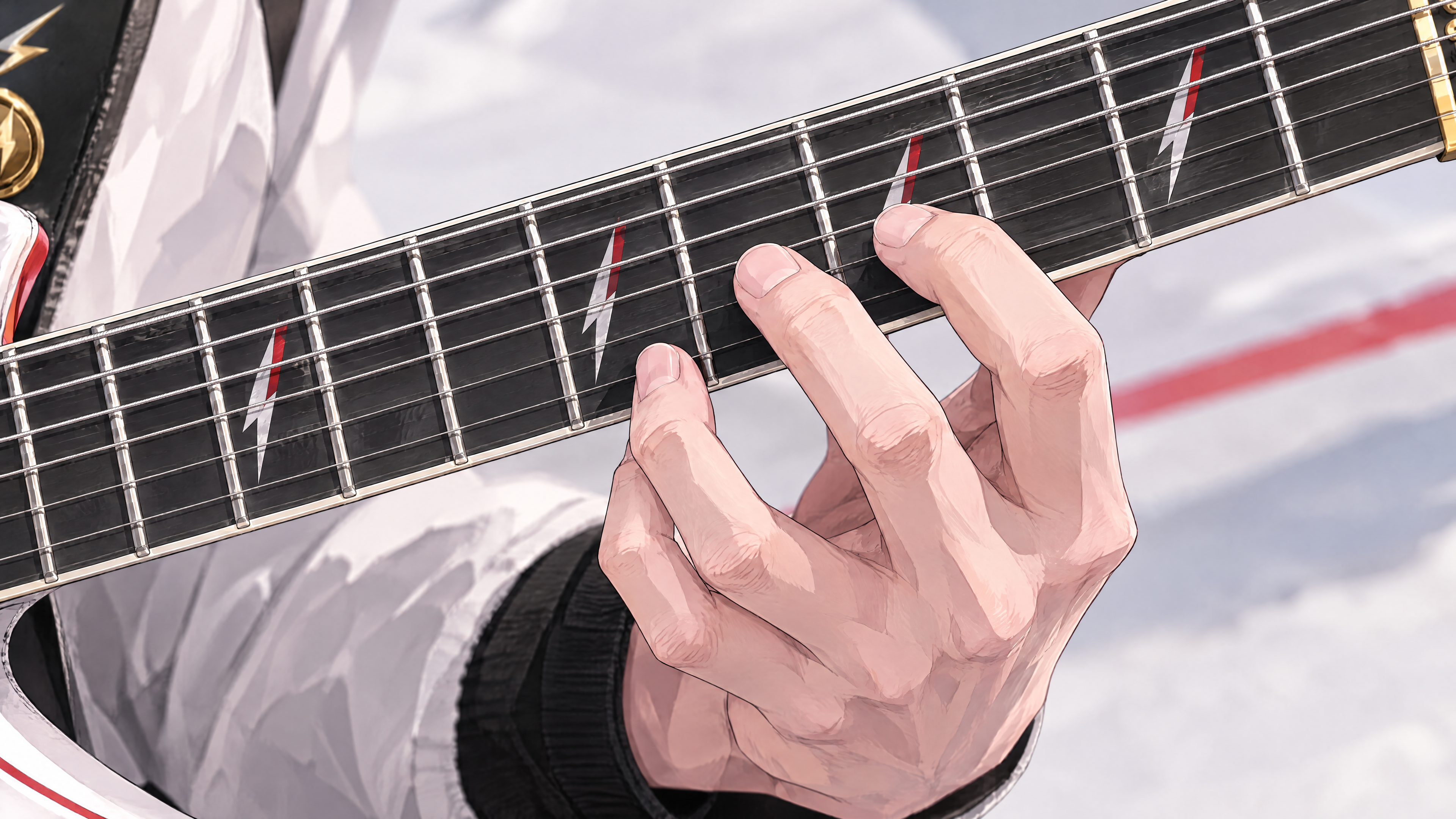
MAIN OBJECTIVE Create ONE highly detailed cinematic 16:9 extreme close-up image of @Mo_orii’s LEFT HAND pressing strings on the fretboard of his approved electric guitar. This is Scene 3 of the WH51 music video "Дотянуться до тебя". The image must feel like the natural continuation of Scene 2, where the viewer previously saw the right hand and guitar pick near the strings. Now the focus shifts to the LEFT HAND on the fretboard, showing how the guitarist changes notes. The main subject is the fretboard, the six strings, the frets, and the anatomically correct LEFT HAND pressing down on the thicker strings. The guitarist’s face must remain completely outside the frame. This is a single cinematic music-video frame, not a portrait, not a product sheet, not a tutorial diagram, and not a collage. REFERENCE ASSIGNMENTS Референс 1 — @Mo_orii CHARACTER REFERENCE Use this image as the authority for: - The identity of @Mo_orii. - His approved slim adult male proportions. - The natural way he holds the guitar. - The correct orientation of the instrument on his body. - The anatomical logic of his playing posture. - The fact that this is the same guitarist from the previously approved scenes. Do not reveal his face. Do not redesign the character. Only the left hand, a small portion of the wrist, and a minimal cropped part of the musician’s body may appear if necessary. Референс 2 — OFFICIAL ELECTRIC GUITAR MASTER This is the absolute authority for the guitar design. Preserve: - The approved six-string guitar construction. - The exact fretboard geometry. - The correct number of strings. - The correct fret spacing. - The fretboard markers where visible. - The approved neck proportions. - The overall look and technical identity of the instrument. The fretboard must remain immediately recognizable as the neck of the approved guitar from the previous scene. Do not redesign the neck. Do not add extra strings. Do not remove strings. Do not invent additional hardware or decorative features. Референс 3 — SCENE 2 STYLE CONTINUITY REFERENCE Use this image as a continuity reference for: - The established cinematic semi-realistic anime style. - The level of detail. - The daylight quality. - The visual sharpness in the focus area. - The premium music-video close-up feeling. - The controlled background softness. Scene 3 should feel like it belongs directly after Scene 2 in the same visual sequence. GENERAL COMPOSITION Create an extreme close-up of the guitar neck and fretboard. The fretboard should run diagonally through the frame in a dynamic but natural composition. Show approximately 5 to 7 visible frets. The LEFT HAND should occupy a major part of the frame and remain the central subject. The image should clearly show: - Several adjacent frets. - All six strings if the angle allows. - The LEFT HAND fingers pressing the strings. - The surface of the fretboard. - The metallic frets. - The neck geometry. Do not show the full guitar body. Do not show the headstock. Do not show the face. Do not show the full torso. Do not show the entire arm. Do not introduce other band members or other instruments. LEFT-HAND PLAYING POSITION — CRITICAL The visible hand must be the anatomical LEFT HAND. The hand is shown in a believable guitar-playing position on a right-handed guitar. The fingers are actively pressing notes on the fretboard. Focus mainly on the thicker lower strings of the instrument, consistent with the musical idea from Scene 2. At least one or two fingers should clearly press strings down onto the fretboard. The remaining visible fingers should be naturally positioned nearby, ready to change notes. The hand must look like it belongs to a skilled guitarist. The thumb supports the neck from behind and may be only partially visible or fully hidden depending on the angle. The wrist angle must be natural. The finger joints must look anatomically correct. The fingertips must press the strings in a believable way. Do not place the fingers flat in an unnatural beginner-like shape unless naturally required by the note position. Do not create impossible finger bending. Do not twist the hand unnaturally. Do not make the strings pass through the fingers. Do not let the fingers float above the strings if they are supposed to fret a note. ANATOMY — ABSOLUTE PRIORITY The LEFT HAND must have: - Five anatomically correct fingers. - Natural bone structure. - Realistic finger joint articulation. - Correct fingertip placement. - Correct nail orientation where visible. - Believable skin folds and finger compression. - Natural relationship between the hand and the fretboard. No extra fingers. No missing fingers. No fused fingers. No duplicated fingertips. No broken finger anatomy. No melted hand shapes. No fingers merging into the fretboard. No unrealistic finger length. No impossible thumb placement. The visible anatomy must be crisp and stable enough for later animation. FRETBOARD AND STRING ACCURACY Show a technically believable guitar fretboard. There must be exactly six strings. The strings must be: - Straight. - Properly spaced. - Properly aligned across the frets. - Consistent in thickness hierarchy. - Physically believable. The fret spacing must look natural and accurate for a real guitar neck. The frets must be metallic and clearly readable. If fret markers are visible, preserve a believable marker layout based on the approved guitar reference. Do not create extra frets. Do not merge frets together. Do not distort the fretboard perspective. Do not make the strings wavy or broken. Do not let the strings disappear behind the fingers incorrectly. The fingers pressing the strings should create a believable sense of string contact and tension. MUSICAL MOMENT Capture a believable still moment during active playing. This should not be a neutral resting hand. The image should suggest that the guitarist is in the middle of a phrase. One or two fingers are pressing notes with purpose. The remaining hand posture implies the possibility of immediate movement to another nearby fret. Do not depict a huge jump across the fretboard. Do not depict an exaggerated solo pose. Keep the movement potential subtle and natural. The image should support a later animation where the fingers can shift between nearby positions. CAMERA AND FRAMING Use a horizontal 16:9 composition. The camera should be positioned close to the fretboard from a front three-quarter angle. The angle must allow the viewer to clearly understand: - The direction of the strings. - The location of the frets. - The finger placement. - The relationship between the hand and the neck. The neck should cut through the composition diagonally or at a gentle angle, creating a visually dynamic frame. Do not use a flat straight-on technical diagram view. Do not use fisheye distortion. Do not crop so tightly that the viewer cannot read the fretboard structure. Do not crop so loosely that the hand becomes too small. The composition should be slightly wider than Scene 2, but still feel intimate and close. DEPTH OF FIELD Use a cinematic shallow depth of field. The sharpest focus must be on: - The fingers pressing the strings. - The contacted strings. - The immediate frets around the playing position. Allow the farther sections of the neck and the background to become slightly softer. Do not blur the main fingers. Do not blur the strings in the main action area. Do not make the image overly soft or hazy. The detail in the fingers and fretting area must remain highly readable. LIGHTING Use bright natural daytime lighting consistent with the approved WH51 rooftop environment. The lighting should feel clean and outdoor-based. Use: - Natural daylight. - Soft but clear highlights on the strings and frets. - Natural skin shading. - Slight metallic reflections on the frets and strings. - Balanced contrast. Do not use: - Stage spotlights. - Neon lighting. - Sunset lighting. - Night lighting. - Wet reflections. - Harsh flash-like lighting. The image must feel like it belongs to the same bright dry rooftop environment as the approved previous scenes. BACKGROUND The background should be minimal and heavily out of focus. A soft suggestion of the rooftop daylight environment is enough. Do not include readable buildings, signs, text, crowds, or detailed rooftop clutter. The background must not compete with the hand and fretboard. Keep the emphasis entirely on the musical action. STYLE Render the frame in the established WH51 cinematic semi-realistic anime style. The result must look premium, sharp, and visually coherent with the previously approved images. Use: - Refined anime-inspired realism. - Controlled clean linework. - Beautiful material rendering. - Detailed but stable anatomy. - Crisp string and fret detail. - Elegant cinematic lighting. - Professional music-video framing. Do not create photorealism. Do not create glossy CGI. Do not create a flat cartoon. Do not create a painterly blur. Do not create a tutorial-style instructional image. This must feel like a polished frame from the same animated music video world. ANIMATION READINESS This image will later be used for Seedance animation. Therefore, create a pose that is easy to animate naturally. The fingers should already be in a believable fretting position, with subtle potential for nearby note changes. Keep the fretboard geometry stable. Keep the string positions stable. Keep the finger separation readable. Do not create a pose with fingers impossibly tangled together. Do not overcomplicate the chord shape. Prefer a clean, controlled fingering position that can later shift slightly between nearby frets. TEXT AND SIGNAGE Do not add any text, captions, labels, logos, or watermarks. No Chinese characters. No Japanese characters. No Korean characters. No random lettering. No decorative overlays. STRICT CONSTRAINTS - One single cinematic image. - Horizontal 16:9 composition. - Extreme close-up of the LEFT HAND on the guitar fretboard. - Approximately 5 to 7 visible frets. - Exactly six strings. - Anatomically correct LEFT HAND. - Natural fretting position. - At least one or two fingers actively pressing strings. - Correct right-handed guitar orientation. - No face. - No eyes. - No full body. - No other musicians. - No other instruments. - No extra fingers. - No missing fingers. - No fused fingers. - No distorted fretboard. - No extra strings. - No broken strings. - No deformed frets. - No text or watermarks. - No evening or night. - No wet weather. - No rain. - No fog. - No photorealistic style. - No glossy CGI style. - No collage or multi-panel composition. EXPECTED RESULT One highly detailed cinematic 16:9 close-up frame showing @Mo_orii’s anatomical LEFT HAND pressing notes on the fretboard of his approved six-string electric guitar. The fretboard is clearly visible with approximately 5 to 7 frets in frame. The strings, frets, and finger placement are sharp and technically believable. The hand is captured in a natural playing moment, suitable for later animation of note changes. The face and body remain outside the frame. The lighting is bright natural daytime. The background is soft and unobtrusive. The image is visually consistent with Scene 2 and with the approved WH51 semi-realistic anime music-video style.
Бесплатный старт · Генерация видео и картинок с ИИ за секунды
More from this creator


More Gpt Image 2.5 images
См. все →