Image - 2026-11-16 03:36
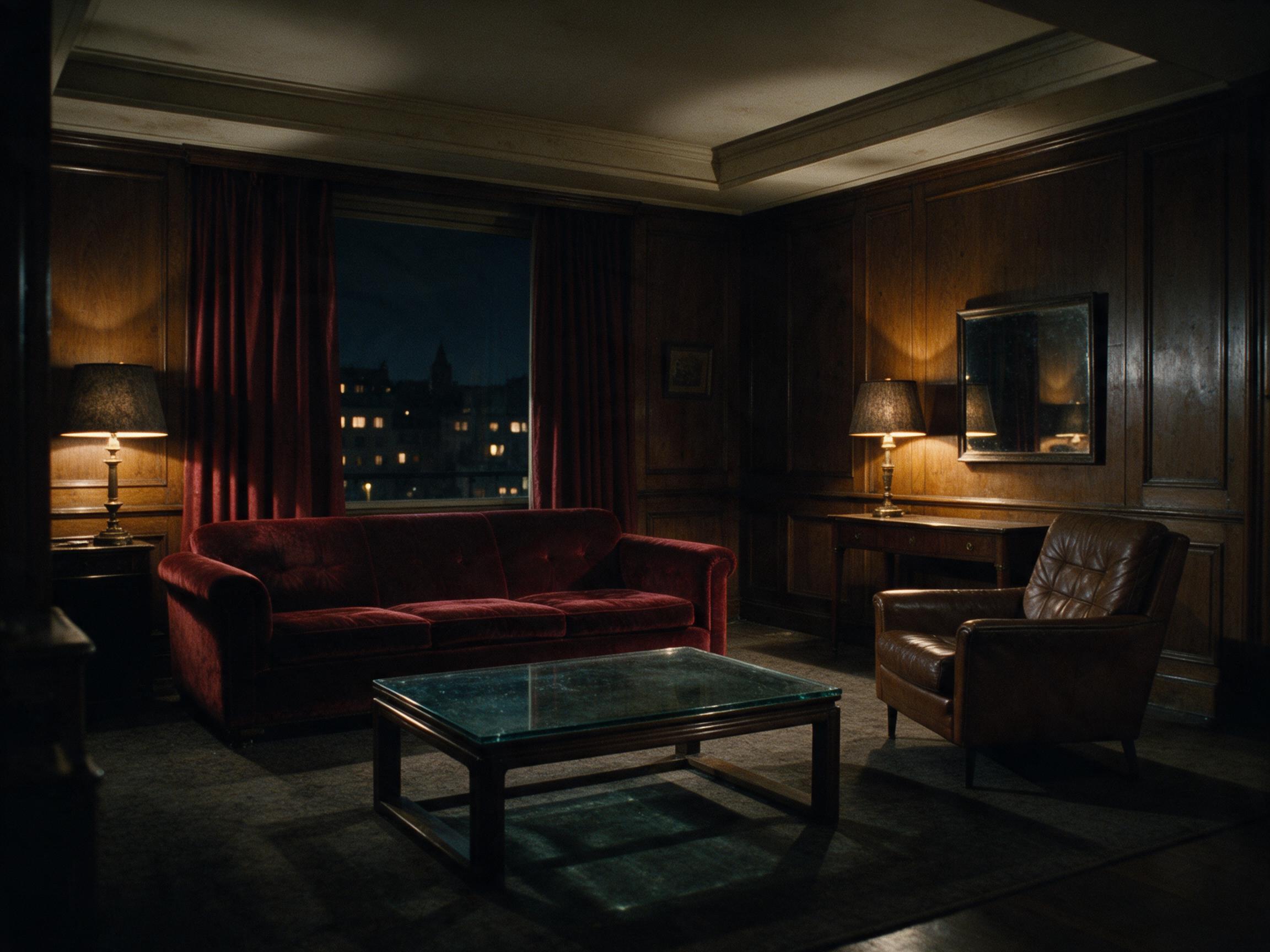
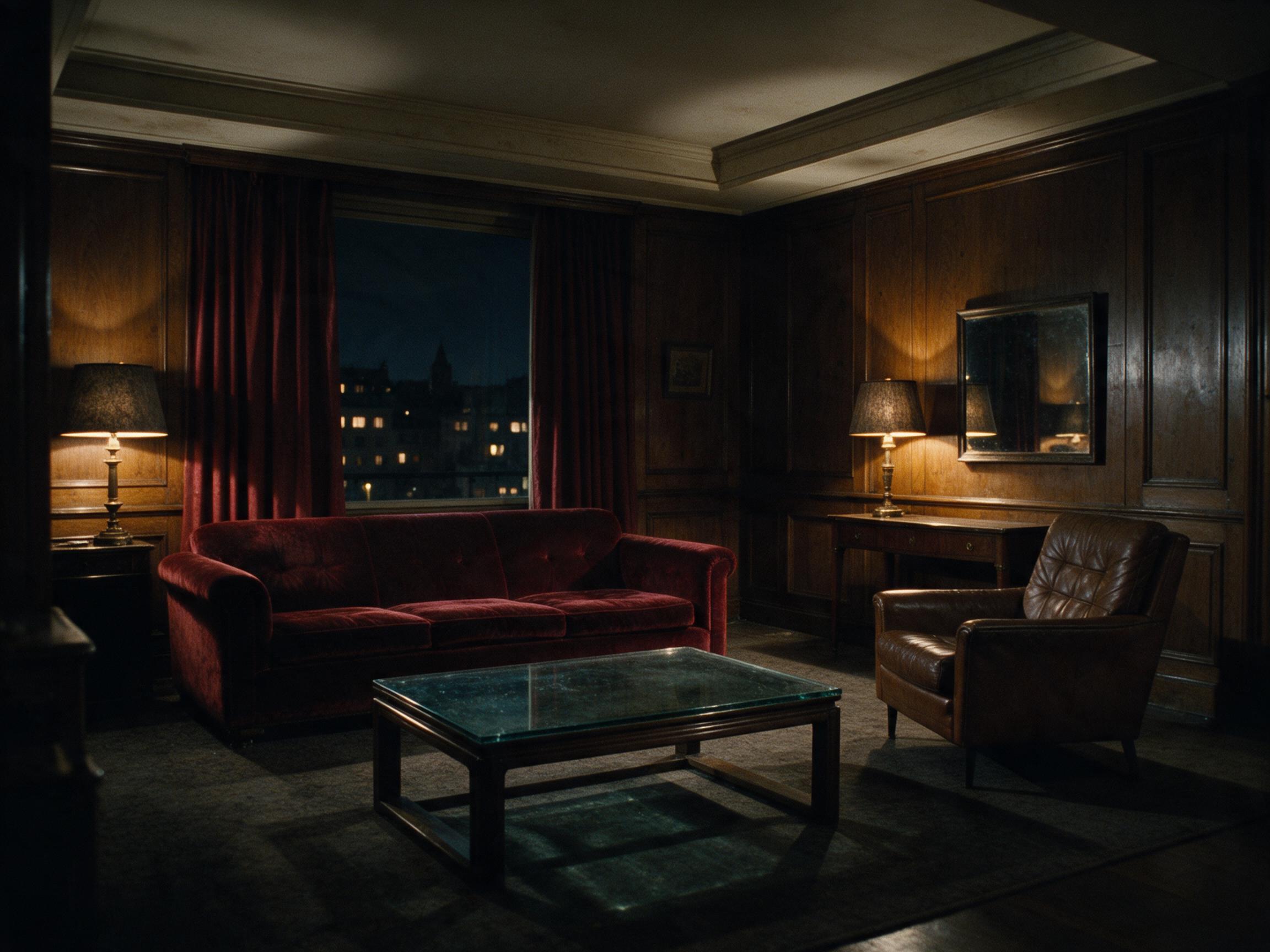
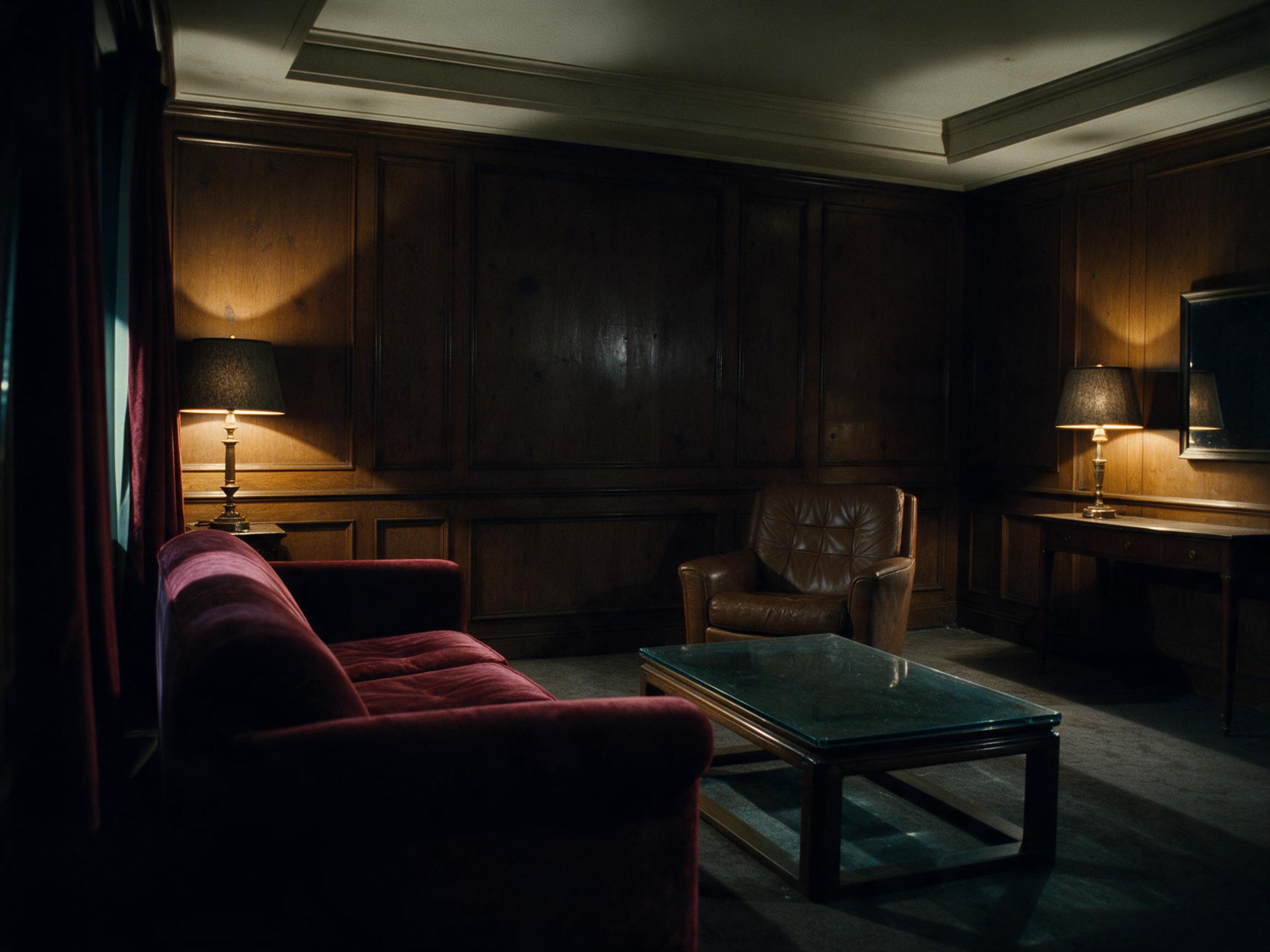
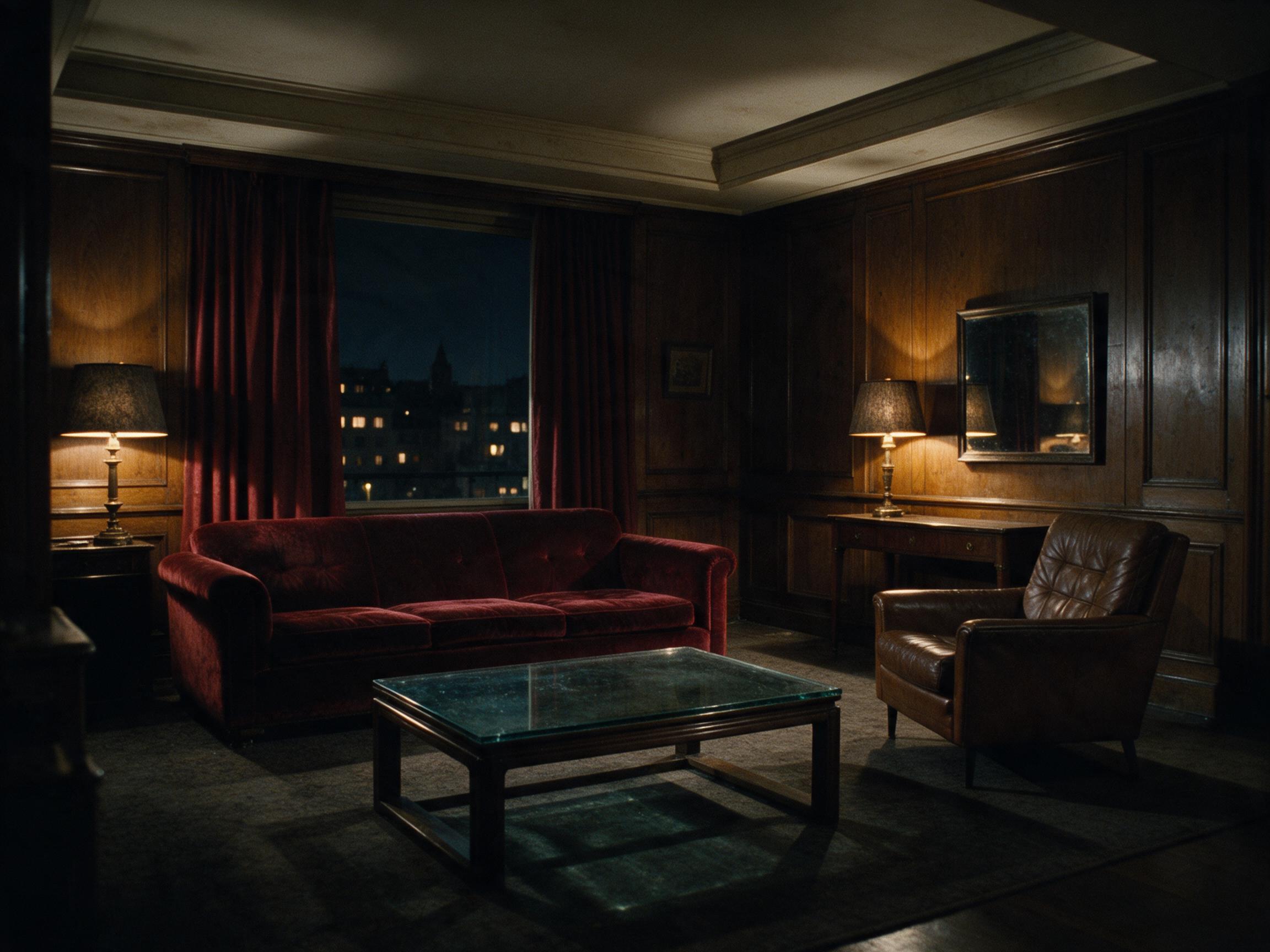
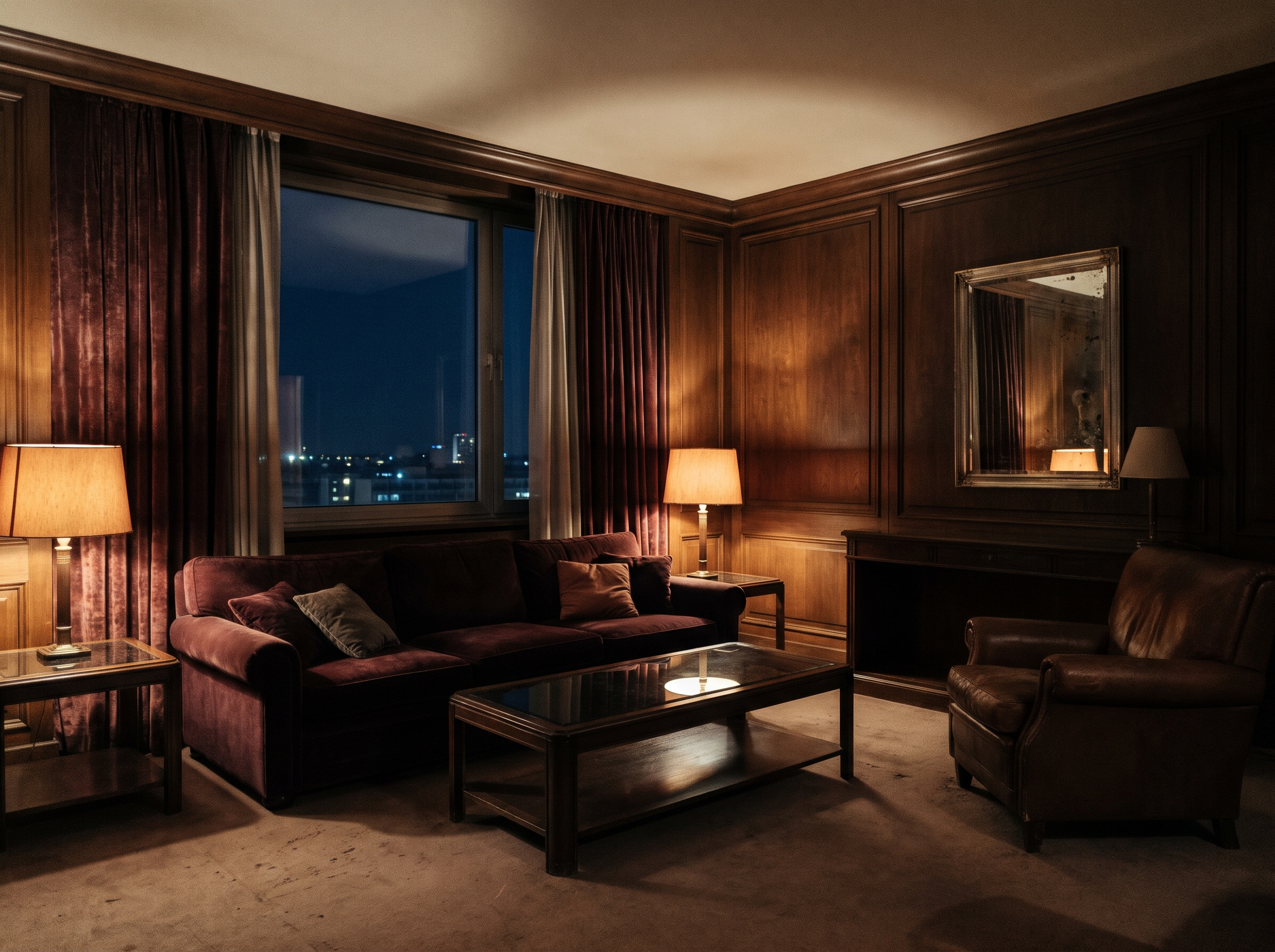
A wide establishing shot of an entirely empty, luxurious European hotel suite at night, circa 1978–1982, photographed as an authentic still from a late-1970s European psychological crime thriller. **ENVIRONMENT AND ARCHITECTURE** An expensive, intimate, subtly decadent hotel sitting room with a coherent, physically believable architectural layout. The space is elegant but aging, with the accumulated character of an exclusive hotel that has been occupied for many years. The walls are covered in dark walnut wood paneling, with visible natural grain, subtle variations in tone, aged lacquer, and minor surface imperfections. The architecture is restrained and period-appropriate, with realistic ceiling height, convincing room proportions, and understated architectural detailing. The interior must feel genuinely European, sophisticated and slightly oppressive, suggesting discreet wealth, private encounters, and an atmosphere of unspoken tension. **SPATIAL LAYOUT AND FURNITURE** The main seating area occupies the center of the composition. A low, generously proportioned sofa upholstered in deep oxblood burgundy velvet stands against the walnut-paneled rear wall, slightly left of center. Its silhouette is distinctly late-1970s: low, substantial, softly structured, with broad cushions and restrained vintage detailing. The velvet has a realistic directional nap, subtle variations in color, faint compression marks, and slightly imperfect upholstery. Directly in front of the sofa stands a low rectangular vintage coffee table combining dark polished wood and smoked glass. The glass has authentic thickness, muted reflections, faint scratches, and subtle signs of use. The tabletop is mostly clear, allowing its construction and proportions to remain visible. To the right of the coffee table sits a single vintage leather armchair, positioned at a natural conversational angle toward the sofa. Its dark tobacco-brown leather shows restrained creasing, softened edges, and the gentle patina of age. On the right-hand walnut-paneled wall stands a narrow dark wooden console beneath a medium-sized rectangular vintage mirror. The mirror has a subtle aged frame and slightly imperfect reflective glass. Its reflection accurately corresponds to the actual room geometry and visible furniture, without introducing additional spaces or objects. A large window occupies the left portion of the far wall, adjacent to the sofa. Heavy floor-length curtains in dark wine-red fabric are partially drawn apart, revealing the distant lights of a European city at night. The exterior appears genuinely nocturnal, with scattered amber apartment windows, subdued streetlights, and indistinct architectural silhouettes against a blue-black sky. The window, sofa, coffee table, armchair, and mirrored console must all remain clearly visible within a single coherent wide composition. Their positions, relative dimensions, and spatial relationships must be immediately understandable. **LIGHTING** The room is illuminated primarily by several authentic late-1970s table lamps with warm tungsten bulbs and aged fabric lampshades. One lamp positioned near the sofa provides the dominant amber illumination, while another practical lamp near the console softly reveals the opposite side of the room. The lamps create localized pools of warm light, realistic illumination falloff, layered shadows, and subtle golden reflections across the wood, leather, glass, and mirror. A very faint cold blue-cyan glow enters through the large window from the nocturnal city outside, providing a restrained color contrast against the warm tungsten interior. The lighting is low-key, naturalistic, and psychologically charged. Deep shadows collect in the corners and beneath the furniture, but the architectural structure, furniture silhouettes, and major surfaces remain distinguishable. Avoid excessively dark crushed blacks, theatrical spotlights, exaggerated colored lighting, or perfectly even illumination. **MATERIALS AND LIVED-IN REALISM** Every surface must display believable physical texture and restrained age. Walnut veneer with fine scratches and uneven sheen. Velvet with subtly disturbed fibers and slight cushion deformation. Leather with natural creases and softened wear. Smoked glass with faint smudges and imperfect reflections. Aged brass lamp fittings with a muted patina. Heavy curtain fabric with irregular folds and realistic weight. A dark, slightly worn carpet anchors the seating arrangement, with modest variations in pile and texture. The environment feels lived-in through ordinary material wear and small imperfections rather than conspicuous clutter. Nothing appears newly purchased, artificially distressed, excessively decorated, or arranged for an interior design advertisement. **CAMERA AND COMPOSITION** Horizontal 4:3 aspect ratio. A carefully composed wide master establishing shot, photographed from a fixed camera position near the entrance of the room, at approximately 1.5 meters above the floor. A natural 32–35 mm full-frame equivalent lens perspective, wide enough to establish the complete seating arrangement without noticeable ultra-wide distortion. The camera faces diagonally into the suite, creating a clear sense of foreground, middle ground, and background. The near foreground contains a modest section of dark carpet and unobstructed floor, providing spatial depth. The midground is anchored by the coffee table, sofa, and armchair. The background reveals the walnut-paneled walls, partially opened curtains, night window, console, and mirror. Maintain convincing architectural perspective, natural vertical lines, physically accurate furniture scale, and consistent spatial geometry. Use a moderately deep, optically plausible depth of field so that all important pieces of furniture and architectural landmarks remain recognizable. Distant city lights may be slightly softened by the window glass and natural nighttime exposure. The composition should feel observational and subtly asymmetric, as though the camera has quietly entered a real room rather than documenting a staged luxury property. The image must function as a reliable environmental reference for reconstructing the same location from additional camera angles in future scenes. **COLOR PALETTE** Deep oxblood burgundy, dark walnut brown, tobacco leather, muted antique gold, warm amber highlights, charcoal shadows, and restrained cold blue-cyan night illumination. Rich but naturally subdued colors. Slightly faded period-appropriate saturation, realistic color contamination between tungsten light and nocturnal shadow, and no artificially vibrant modern color grading. **PHOTOGRAPHIC AND ANALOG FILM CHARACTER** Maximum photographic realism, with the tactile and optical characteristics of genuine late-1970s 35 mm motion-picture film. Organic fine-to-moderate film grain, unevenly distributed and naturally integrated into the image. Subtle optical softness without losing essential architectural detail. Gentle highlight halation around illuminated lamps. Natural contrast roll-off, imperfect exposure response, believable shadow density, and slightly imperfect color separation. Physically convincing reflections, genuine fabric texture, authentic wood grain, realistic glass behavior, and natural material response to mixed lighting. The final image should look like a carefully selected frame from a forgotten European crime film, captured with a real camera on a physical set in 1980. Quiet, intimate, expensive, faintly threatening, and deeply atmospheric. A sense of narrative anticipation without any visible action. **STRICT SCENE EXCLUSIONS** The entire room is completely unoccupied. No people, no human silhouettes, no animals, no visible reflections of people or animals. No knives, no lipstick, no chains, no weapons, no blood, no cigarettes, no prominent narrative props. No modern electronics, contemporary furnishings, minimalist decor, futuristic architecture, ornate palace styling, excessive ornamentation, surreal objects, or artificial fog. No excessive mess, no exaggerated glamour, no glossy CGI surfaces, no hyper-sharpened digital textures, no cinematic teal-and-orange exaggeration, no fake film borders, no typography, no logos, and no watermarks. Preserve one coherent room with realistic architectural continuity, readable furniture placement, restrained period authenticity, and the natural imperfections of a genuinely photographed environment.
Бесплатный старт · Генерация видео и картинок с ИИ за секунды
More from this creator

More Seedream 5.0 images
См. все →