Image - 2026-10-06 04:02
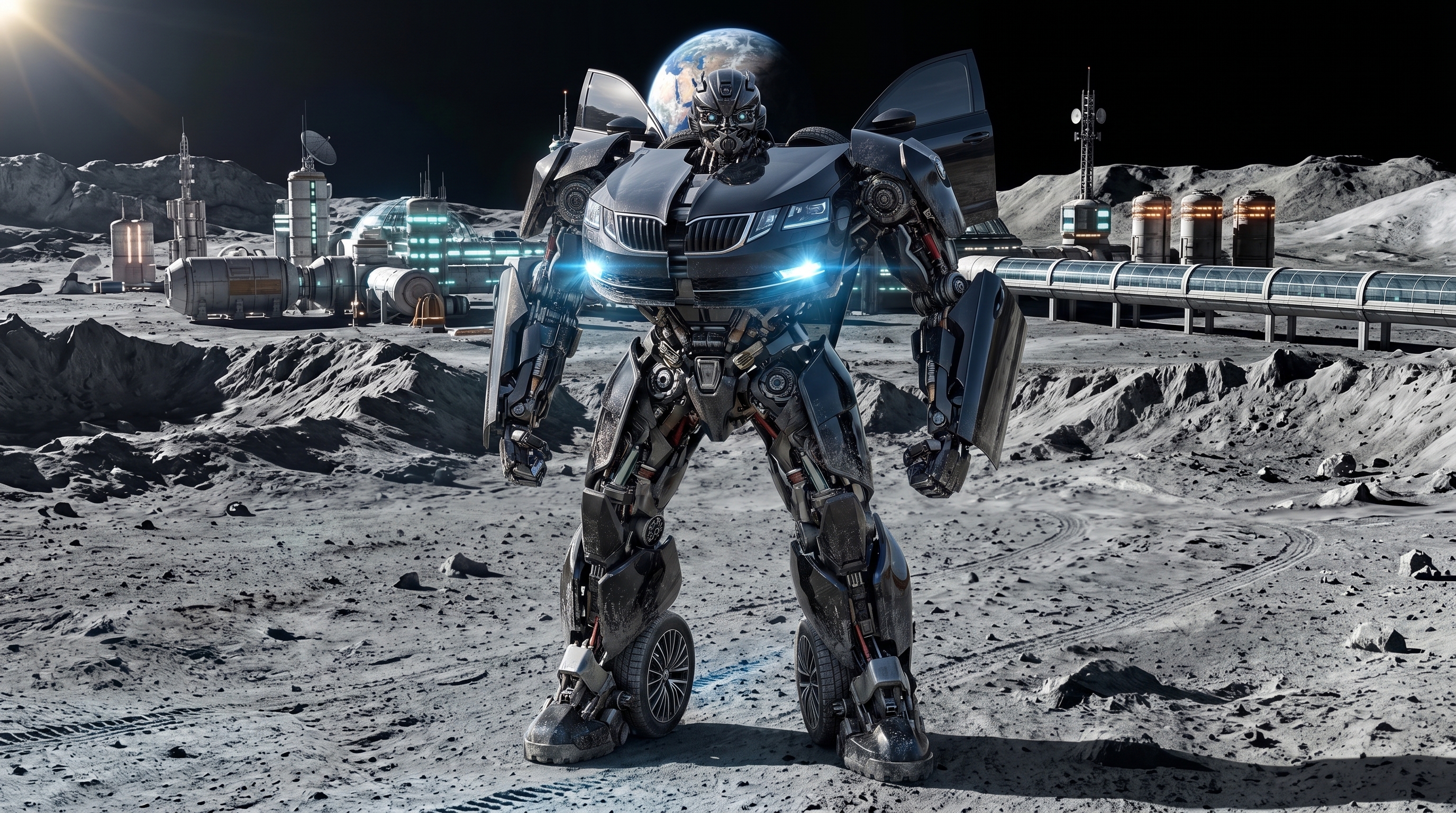
Edit the source image: transform the exact source car into a photorealistic live-action transforming alien robot while preserving the car’s unique visual identity, exact design language, colors, materials, and recognizable components. Use the complex mechanical transformation logic and dense layered engineering associated with early-2000s live-action transforming-robot cinema: the vehicle must genuinely unfold, separate, rotate, telescope, and reassemble into an articulated humanoid mechanical body, rather than looking like a generic humanoid robot with car panels simply attached to its surface. Follow the provided robot reference specifically for the logic of how vehicle components split into multiple functional mechanical sections and integrate into the anatomy. Keep the robot’s scale and proportions physically believable relative to the original car: it should look as though this single vehicle transformed into this single robot, with approximately the same total material volume and mass. Give it an athletic, agile humanoid silhouette with balanced proportions, a defined torso, articulated limbs, and a relatively compact profile; avoid an oversized, excessively wide or bulky body that looks as if it contains parts from two vehicles. Preserve the original headlights and fog lights with their exact shapes, dimensions, internal optics, proportions, and visual design. Position them naturally on the robot’s chest and do not redesign, stretch, simplify, duplicate, or change their geometry. The headlights and fog lights must remain immediately recognizable as the exact lights from the source car. Integrate the original front fascia into the chest transformation, but do not leave the front bumper as one complete car-width piece across the torso. Split the front bumper precisely into two separate left and right sections along the centerline; mechanically rotate and integrate these halves into the left and right sides of the chest while retaining the recognizable original bumper geometry. Break the remaining exterior bodywork into numerous believable interlocking sections following the transformation logic shown in the robot reference: hood, fenders, grille elements, doors, roof, quarter panels, wheels, suspension components, drivetrain elements, and structural pieces should become functional parts of the torso, shoulders, arms, pelvis, thighs, lower legs, and back. Vehicle panels should be fragmented and mechanically articulated where necessary rather than hanging as large decorative shells. Fill the spaces between recognizable exterior panels with convincing exposed mechanical engineering: layered metal structures, actuators, pistons, hinges, gears, cables, joints, sliding rails, hydraulic mechanisms, and compact internal components. Every visible car component should have a plausible transformation path and mechanical purpose. Keep the original wheels at their real relative scale and integrate them logically into the robot instead of enlarging or multiplying them. Preserve realistic material thickness and the impression that every robot component physically originated from the source vehicle. The head should be an original complex alien-mechanical design derived subtly from the source car’s styling language, with layered metal facial structures and intricate functional mechanisms, without resembling a generic human-shaped helmet. Create a cinematic live-action frame with realistic automotive paint, brushed and machined metal, dark mechanical internals, rubber, glass, subtle scratches, panel seams, natural reflections, realistic wear, and physically plausible materials. Use dramatic but believable directional cinematic lighting that reveals the mechanical layers and silhouette clearly, with controlled highlights on the painted vehicle panels and softer shadows inside the exposed mechanisms. Full-body three-quarter view at approximately eye level, camera positioned far enough away to show the complete robot and clearly read its proportions. Sharp focus across the robot with high micro-detail in the transformation mechanisms and realistic photographic depth. The final result must feel like a physically transformable version of the exact source car, not a robot wearing car parts. Preserve the source car’s defining design features above all else, especially the exact headlight and fog-light shapes and their placement on the chest, while using the reference image for component separation and transformation complexity. Aspect ratio 2:3, 4K.
Бесплатный старт · Генерация видео и картинок с ИИ за секунды
More from this creator

More Fast gen images
См. все →