Image - 2026-07-26 11:25
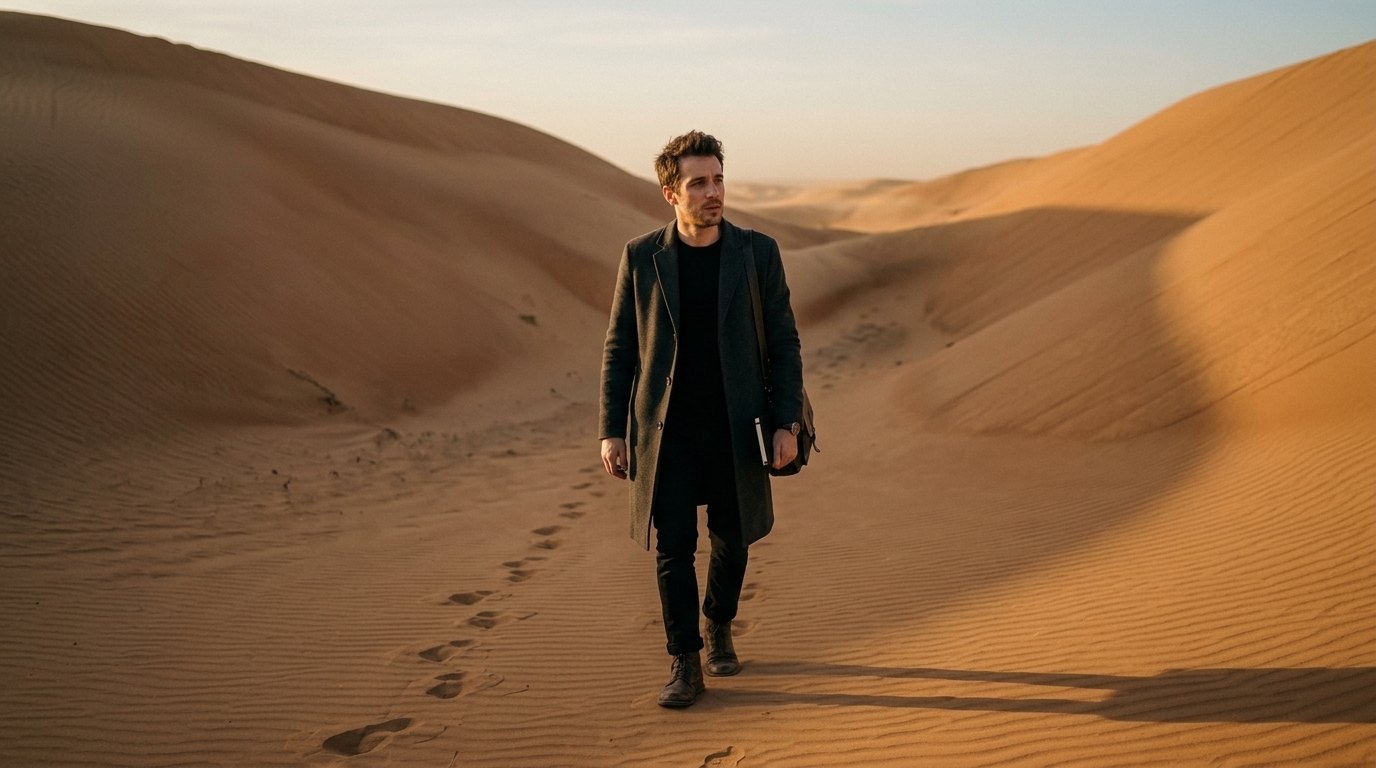
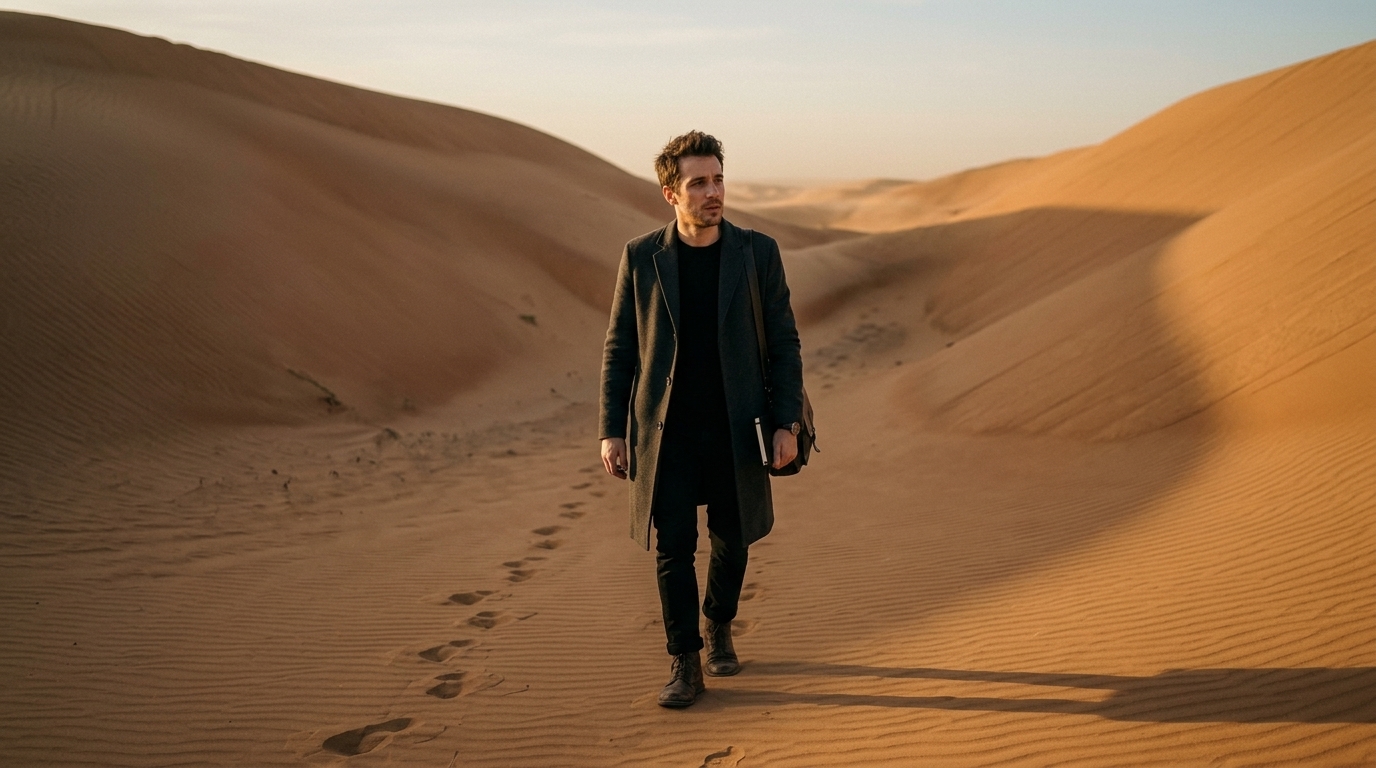
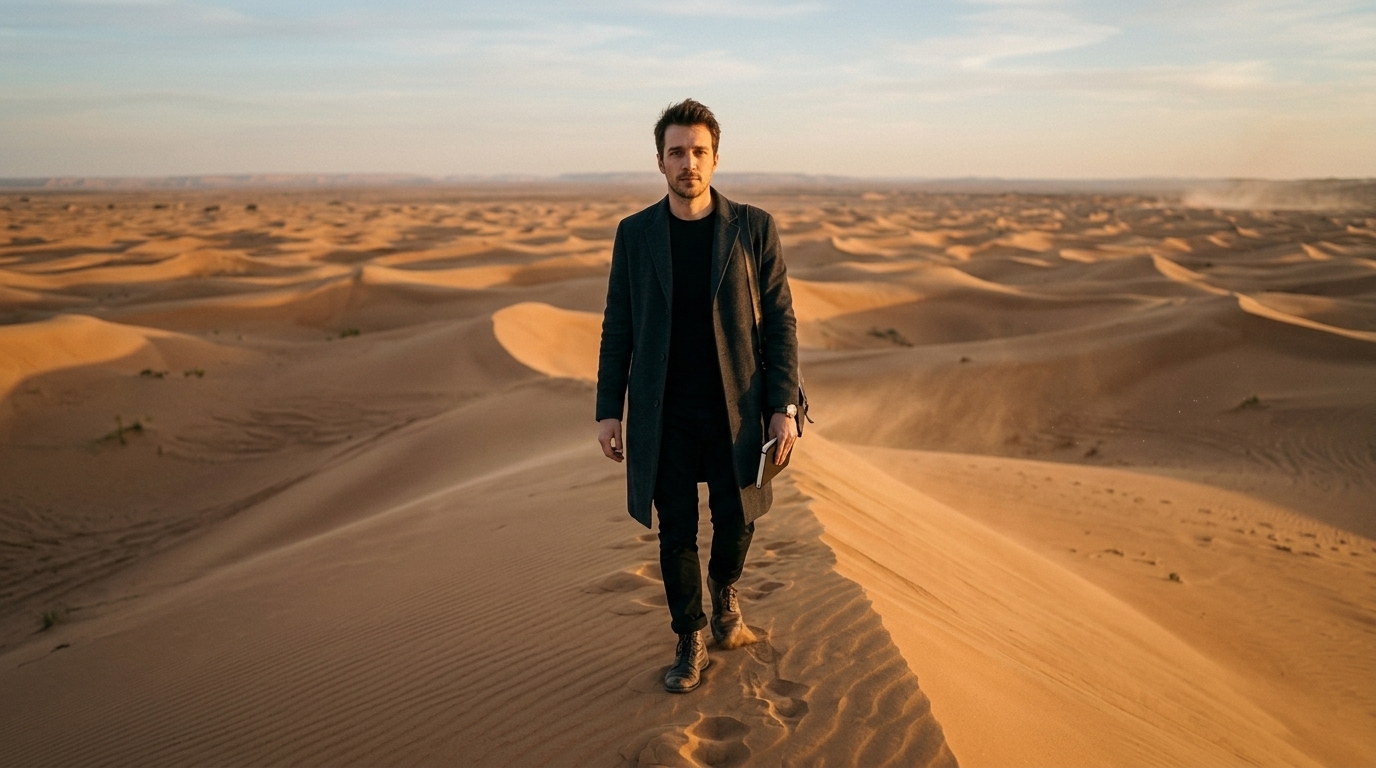
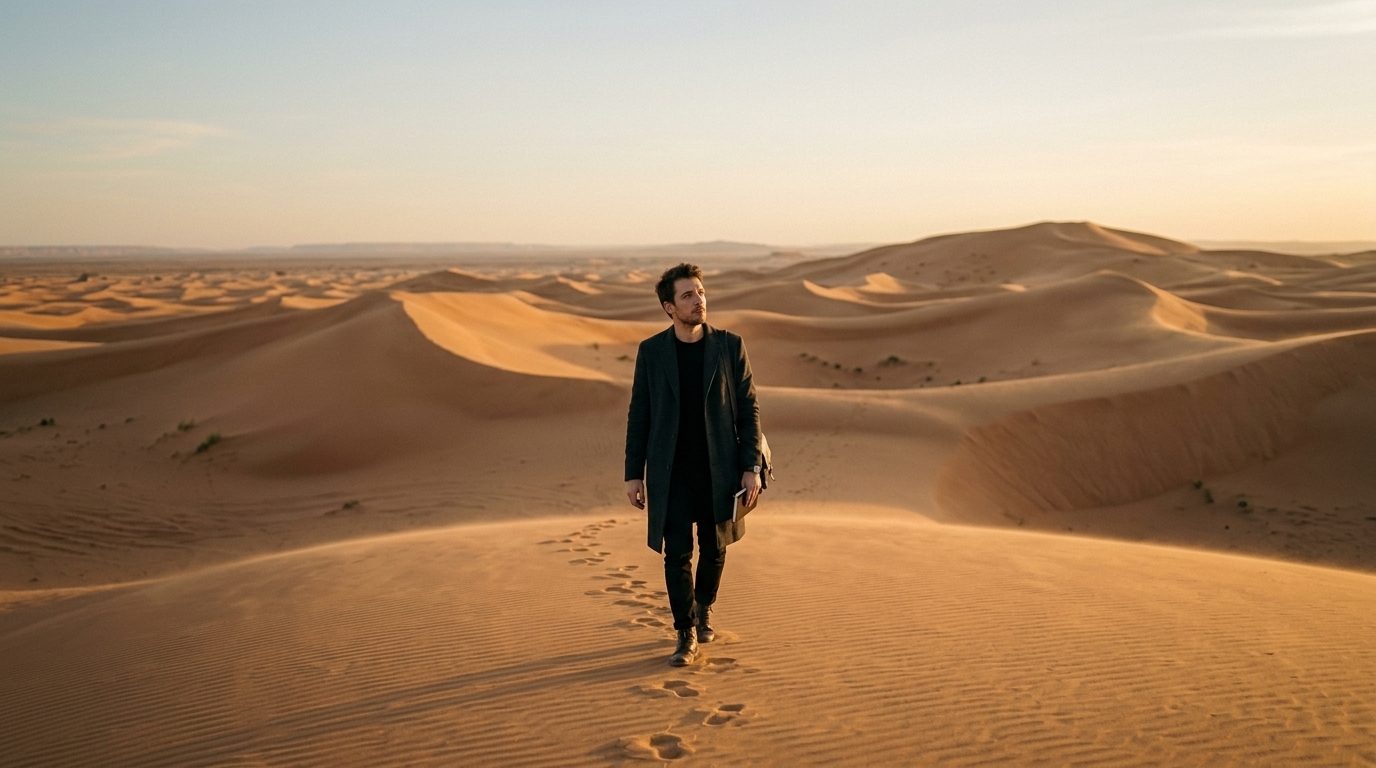
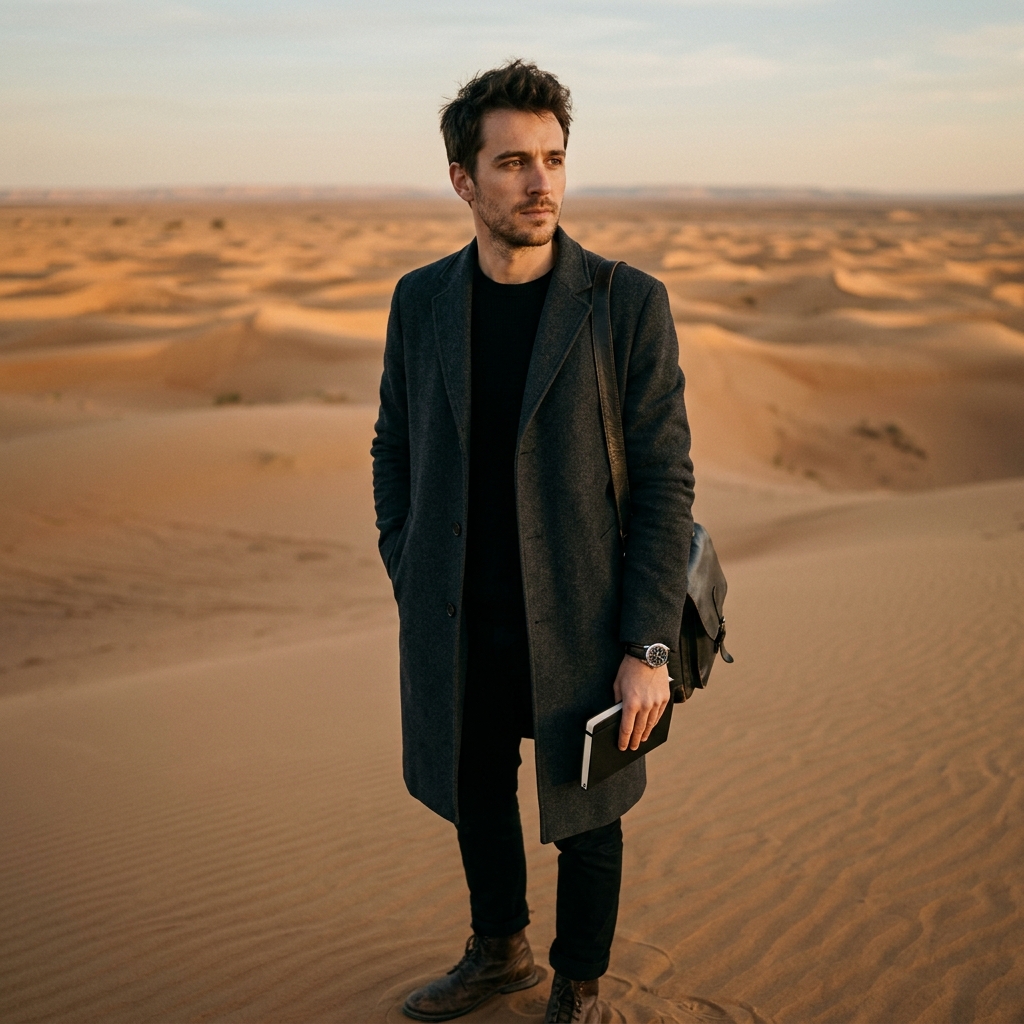
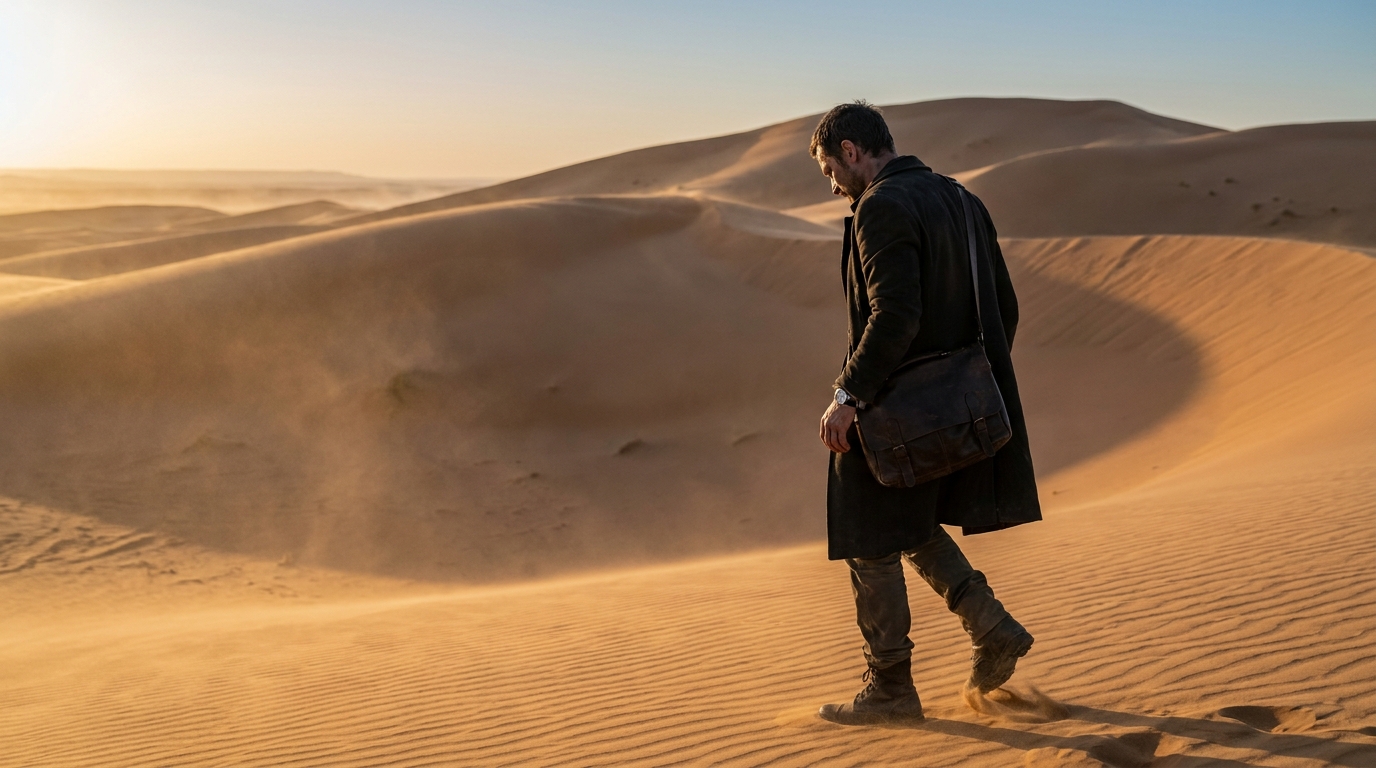
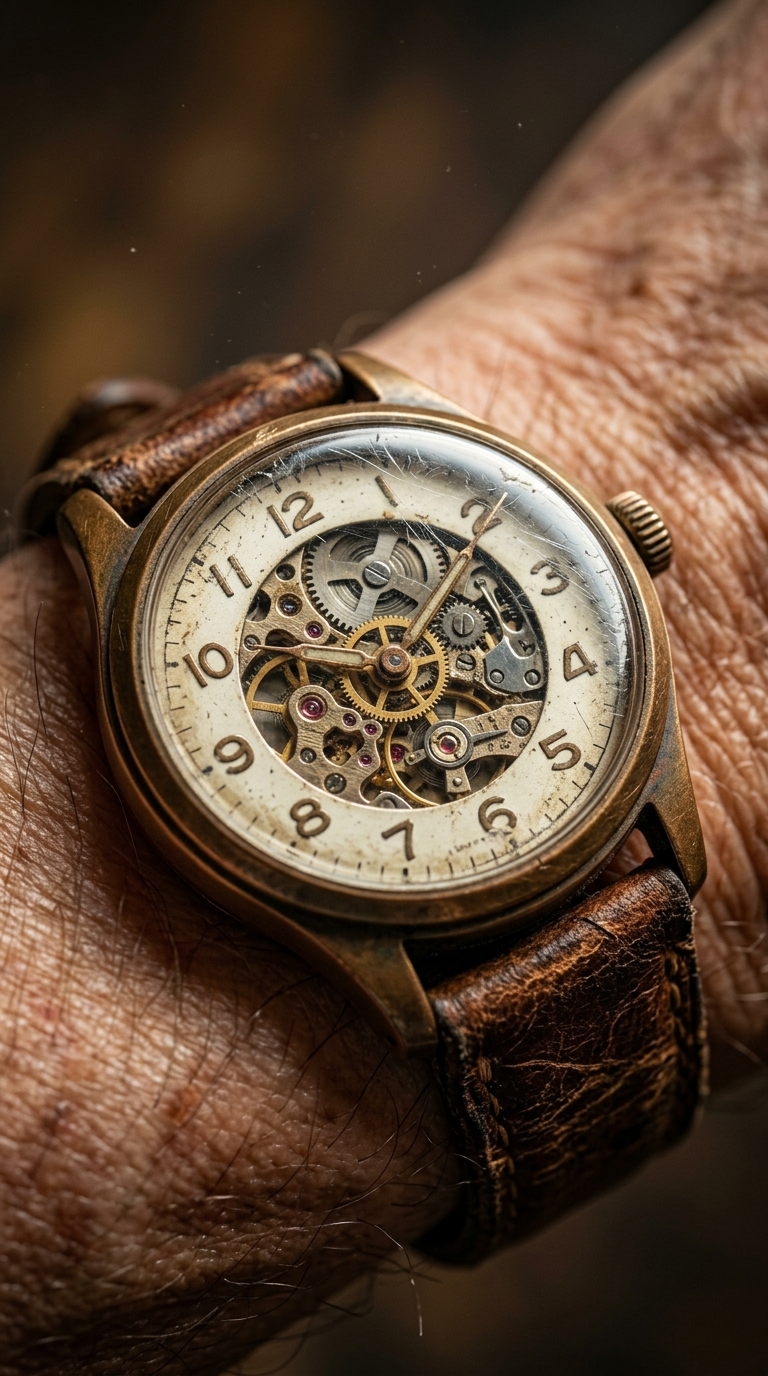
Art style: Cinematic Realistic. A lonely desert corridor formed by two massive dunes at the end of golden hour, with Elias Vane moving through the trough between them as though enclosed by walls of sand carved by centuries of wind. The setting remains utterly devoid of civilization or life, reinforcing a pure wilderness of sand, air, and fading light. Composition is a medium-long frontal shot in 16:9, lower than eye level, with the camera positioned in front of Elias and tracking backward along his path so that the sloping dune walls rise on both sides and channel attention toward his face and body language. The frame should preserve visual continuity with the previous scene: same warm directional sunlight, same desert emptiness, same footprint trail, same human isolation. Elias is now more clearly visible, still walking steadily but with evident accumulated fatigue in his posture, subtle tension in his mouth, and a restrained, searching look in his eyes. He briefly turns his gaze to one side and then back ahead, as if realizing every direction looks the same. Lighting is natural low-angle sunlight, warm and amber, hitting one side of his face while the opposite side falls into soft realistic shadow; dune walls catch glowing highlights on their upper ridges while lower areas transition into cooler muted browns. The mood is intimate but still desolate, increasing the audience’s emotional connection to his exhaustion while preserving the scale and indifference of the desert. Dominant colors are warm gold, sandy beige, muted ocher, burnt amber, and soft brown shadows beneath a sky fading from honeyed light to pale blue. Textures and materials emphasize granular sand, wind-rippled surfaces, compacted footprints, occasional tiny slides along steep dune edges, and dry dusty air. In the foreground, sharply detailed sand ridges and the newest footprints frame the bottom of the image; in the midground, Elias advances with controlled effort through the trough; in the background, the path curves away between towering dune walls toward a horizon softened by haze. Weather and particles include light wind skimming the ground, faint veils of blowing sand, and dust motes glinting in warm sidelighting. Micro-details include crumbling footprint edges, tiny sand grains bouncing in gusts, the long shadow of Elias stretching behind him, and subtle dryness around his lips and eyes, all contributing to a lived-in sense of endurance and uncertainty. ━━━━━━━━━━━━━━━━━━━━━━━━━━━━━━━━━━━━━━ FINAL STYLE ENFORCEMENT (this is the authoritative rendering directive — it overrides any style wording elsewhere in the prompt): Render this image entirely in "Cinematic Realistic" style. Match the lighting grammar, material response, colour science, level of realism / stylisation, line weight, and shading model typical of "Cinematic Realistic". Keep the subject, composition, camera angle, lighting direction, and colour palette from the description above — but EVERY surface, skin, fabric, material, and environmental element must be rendered in the "Cinematic Realistic" idiom, not in any other medium. Character appearance reference (MUST match exactly): - Elias Vane: Portrait of Elias Vane, early 30s, slim build, European appearance, about 180 cm tall, with short dark brown slightly messy hair, light stubble, expressive dark brown eyes, and an intelligent but slightly tired face. He wears a long dark charcoal wool coat over a black sweater, black trousers, worn dark brown leather boots, and a vintage dark leather messenger bag across his shoulder. A small black notebook is visible in one hand or pocket, and a vintage wristwatch is on his wrist. His expression is thoughtful, controlled, and mildly exhausted. Warm low-angle desert light shapes his face against an expansive dune horizon.
Бесплатный старт · Генерация видео и картинок с ИИ за секунды
More from this creator

More Gemini 3.1 Flash Image images
См. все →